Designing Spaces That Bring Stories to Life.
The most powerful environments do more than surround us. They shape how we experience a story.
In 2019, I created the logo for the Minnesota Military & Veterans Museum, the beginning of a visual identity I would spend the next several years developing across its capital campaign, print, digital presence, broadcast PSAs and communications, with the ultimate goal of carrying that identity into the museum itself.
Seven years later, I stood inside the completed museum surrounded by that work at architectural scale. At the grand opening, I was surprised and touched by how many people commented on the logo. It was a meaningful reminder of just how far the project had come.
That journey, from an idea on a screen to an environment people can walk through and experience, captures much of what I love about design.
From immersive museum galleries to television studios, I design spaces that create connection, emotion and understanding. Whether experienced in person or through the lens of a camera, every element matters, from color, imagery and typography to texture, scale, composition and light.
The medium may change, but the purpose remains the same: to use the environment itself as a storytelling tool, helping people connect more deeply with stories that matter.
In my estimation, what makes Jon exceptional is his capacity to listen. He seeks to understand long before he puts pen to paper. Jon is a joy to work with and a state servant.
Randal Dietrich, Executive Director, Minnesota Military & Veterans Museum at Camp Ripley
Museum Gallery Design & Visual Storytelling
Minnesota Military & Veterans Museum
Bringing a visual identity years in the making into a museum dedicated to more than 160 years of Minnesota military history.
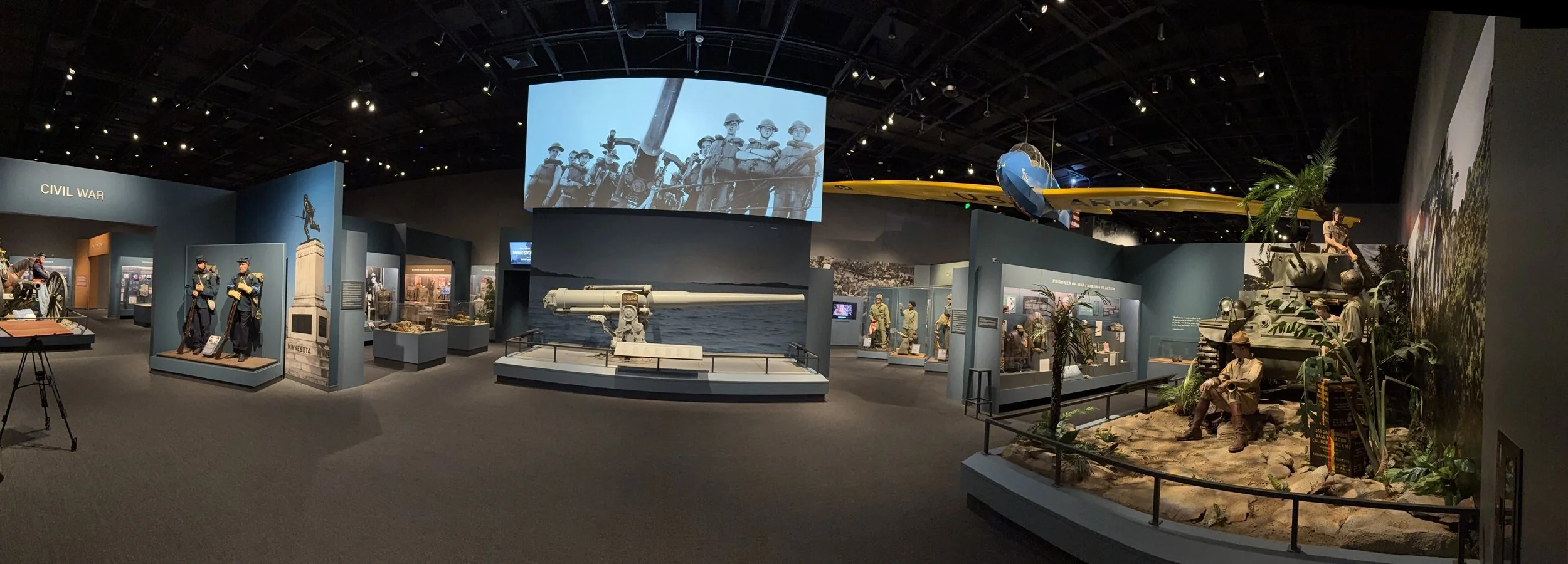
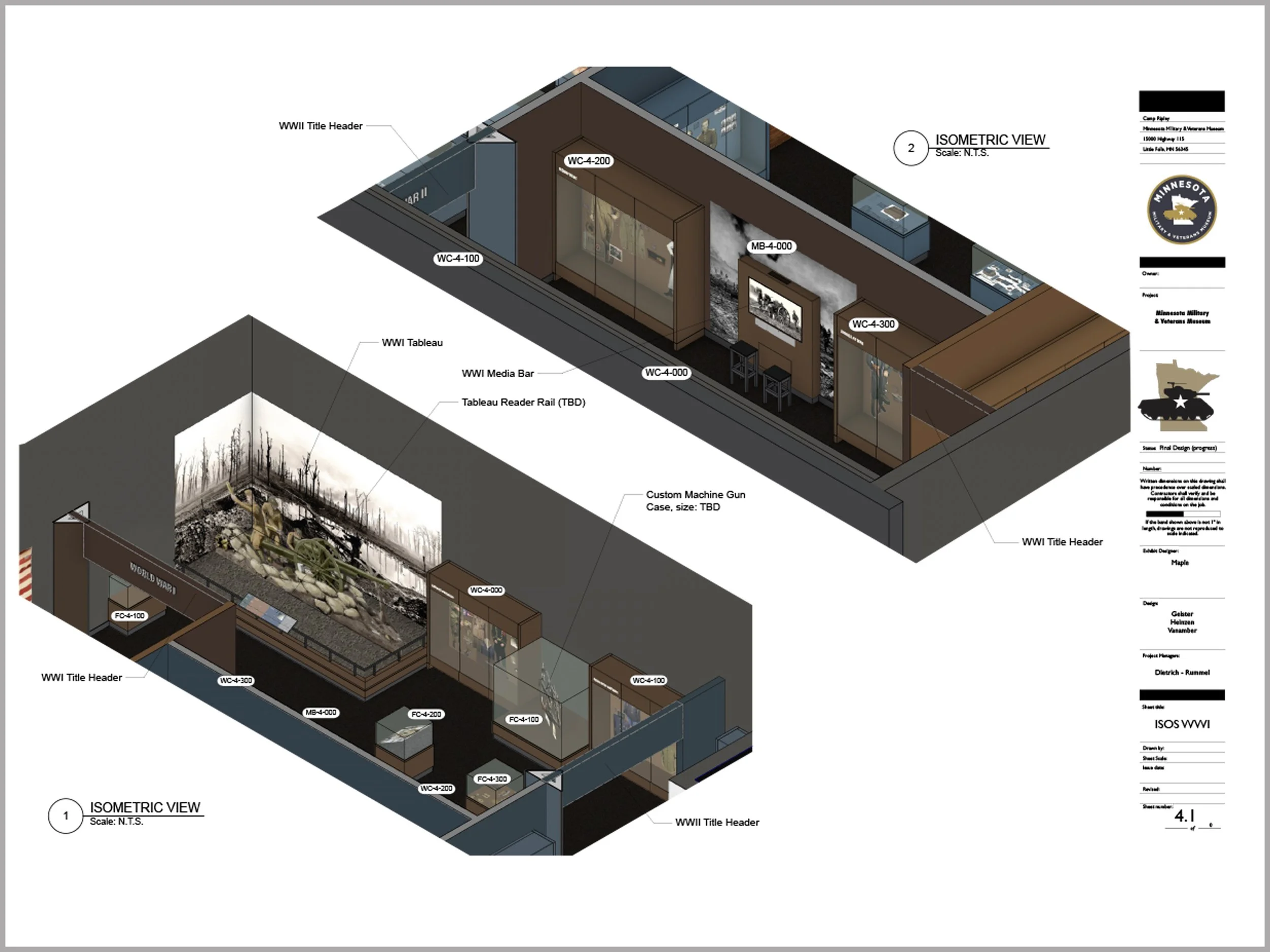
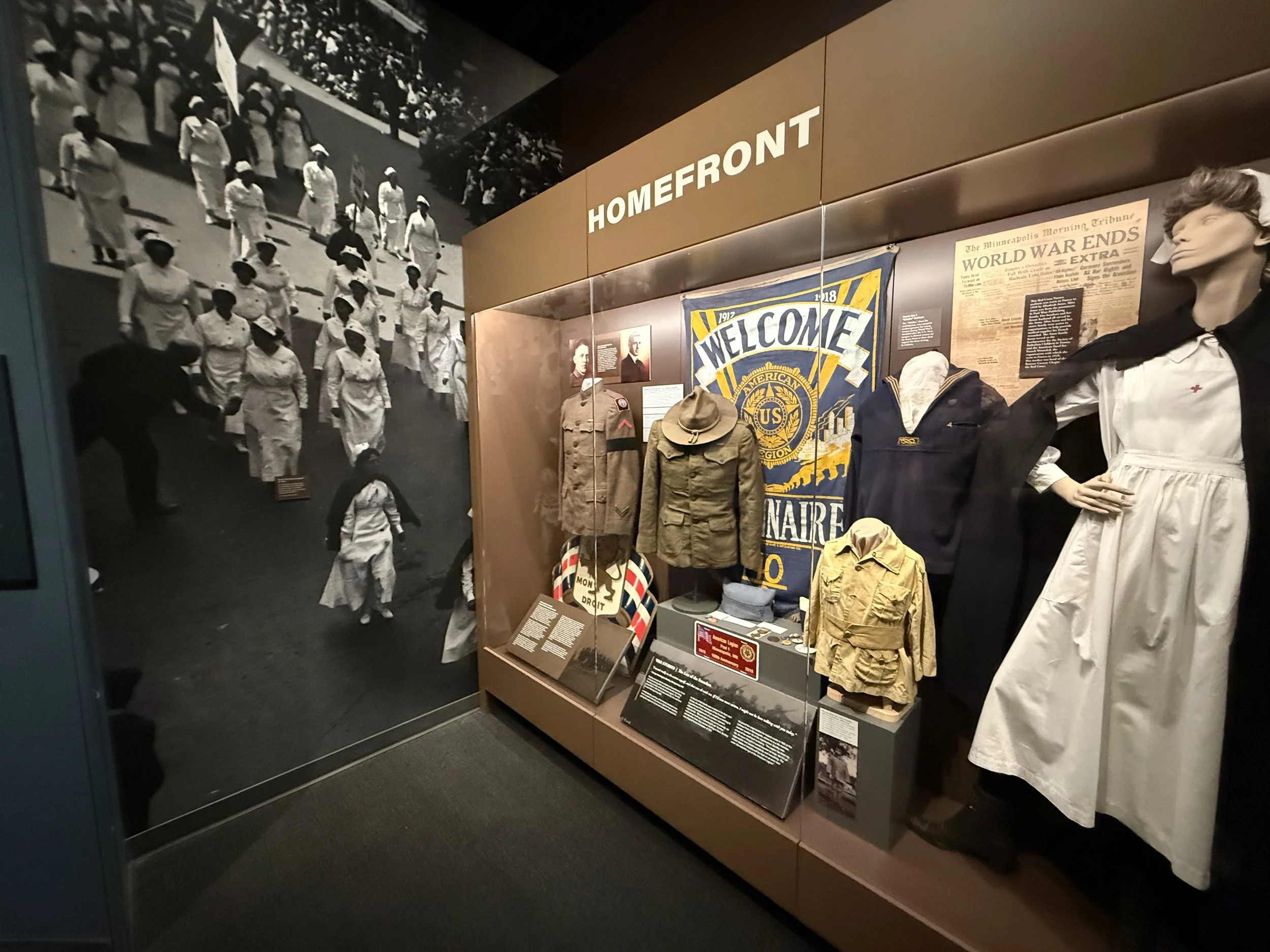
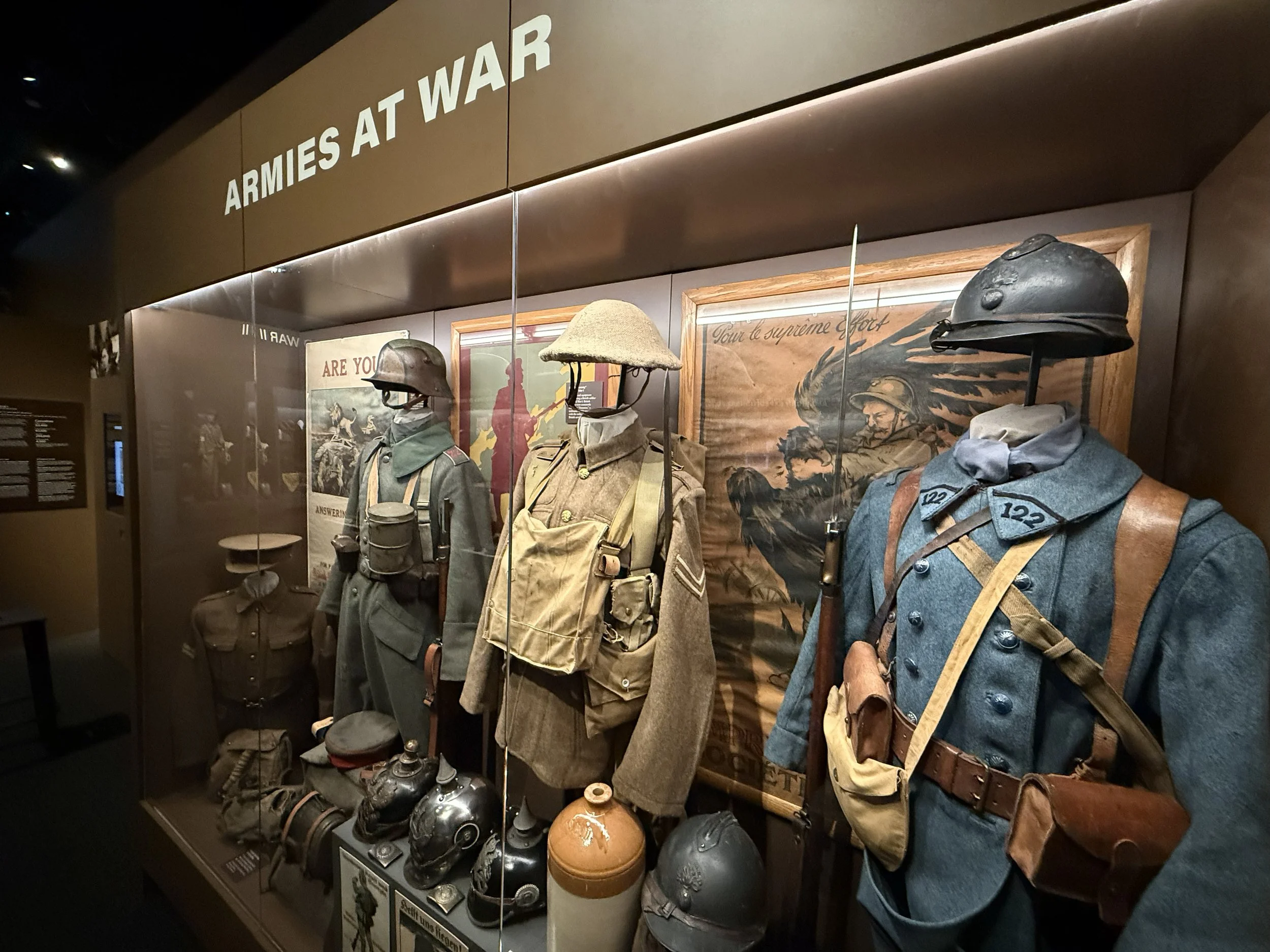
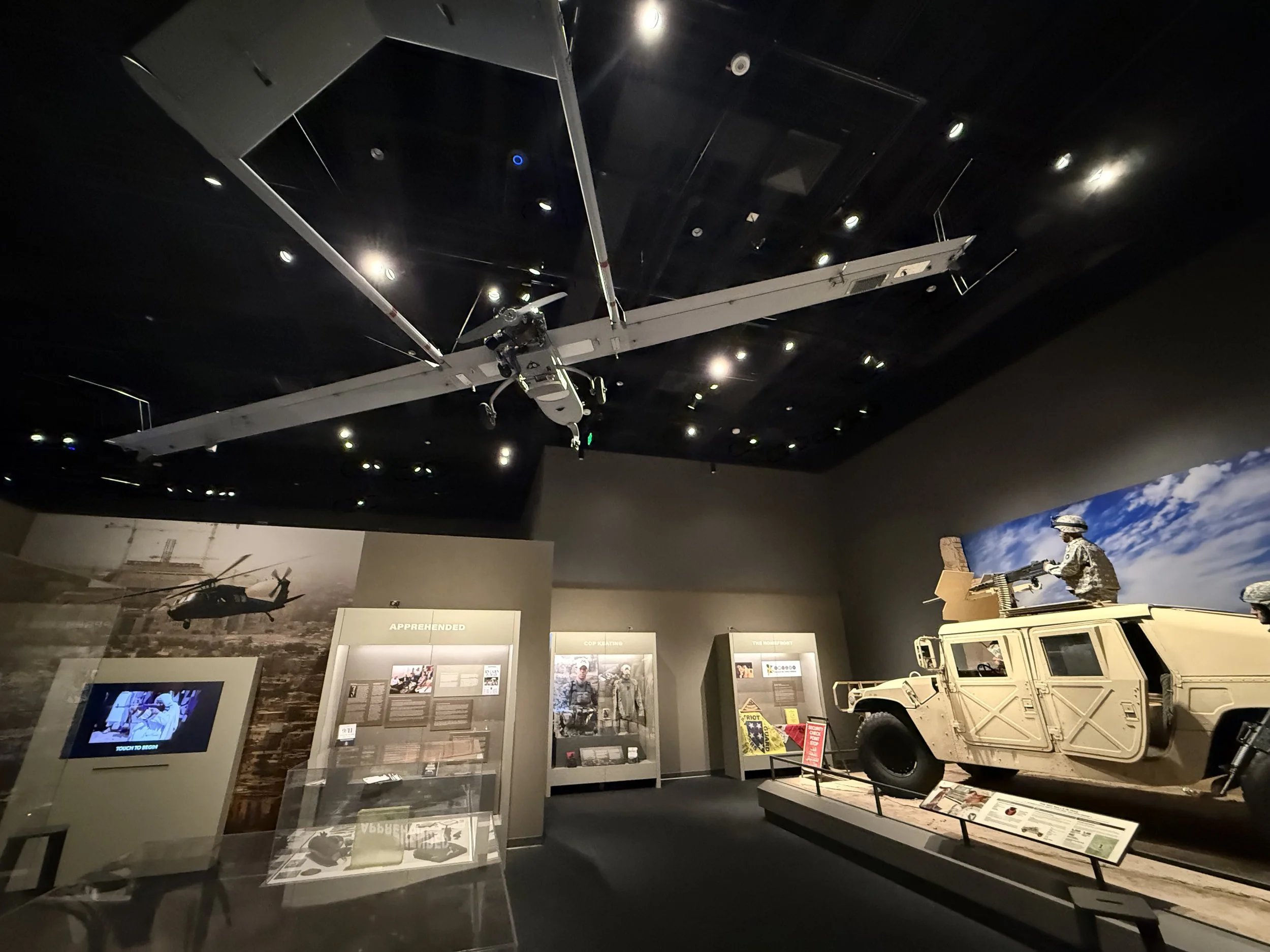
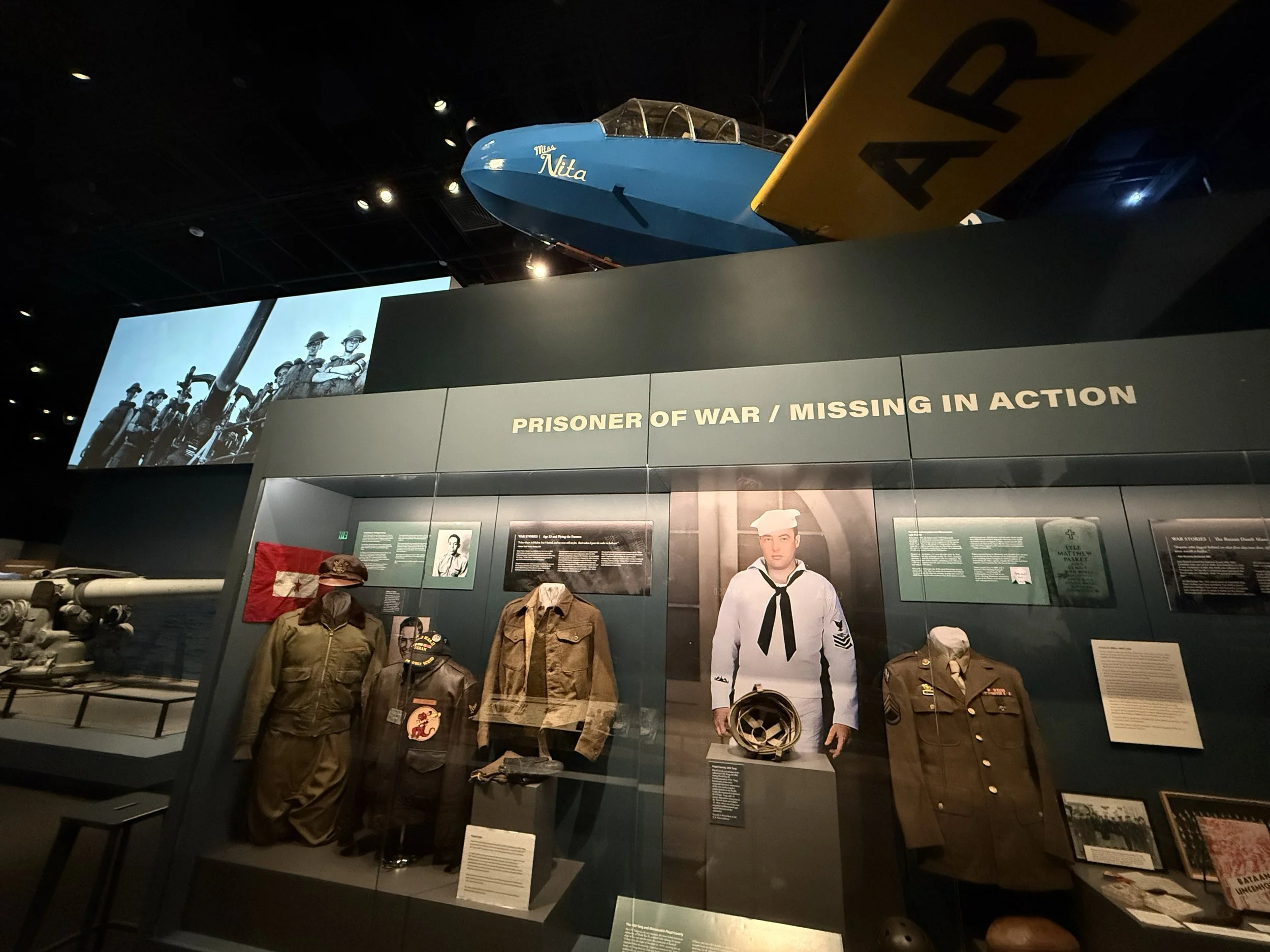
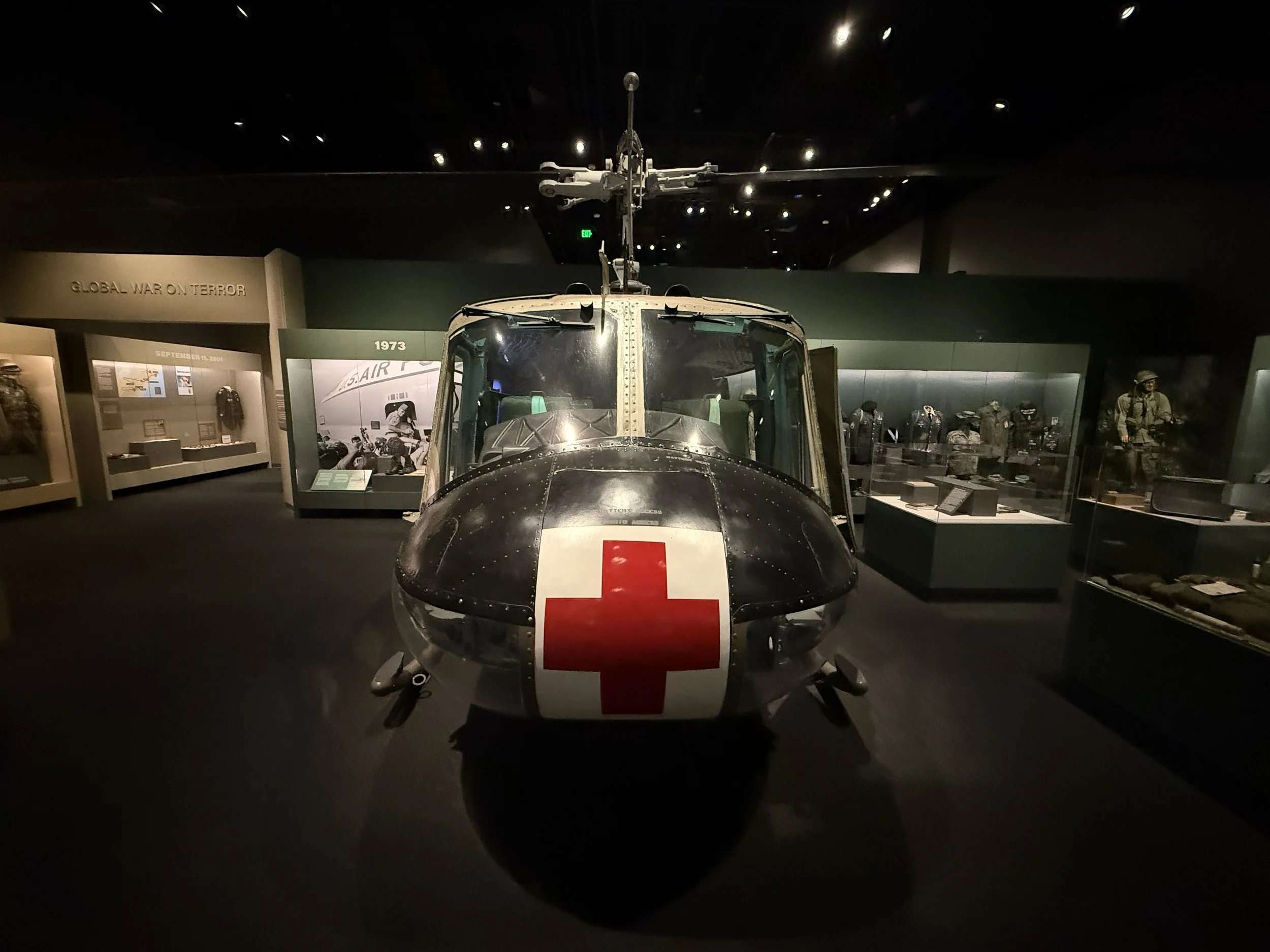
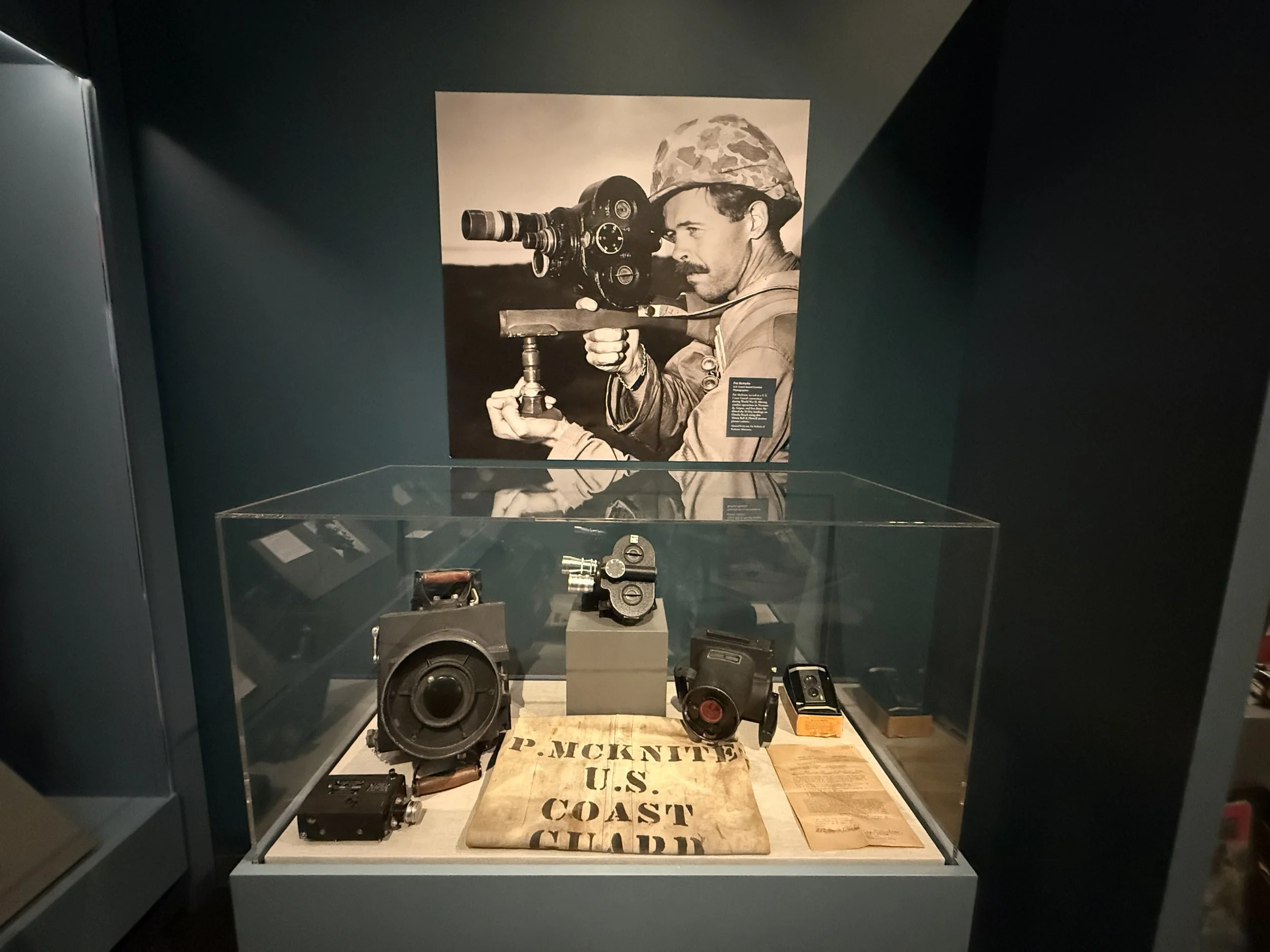
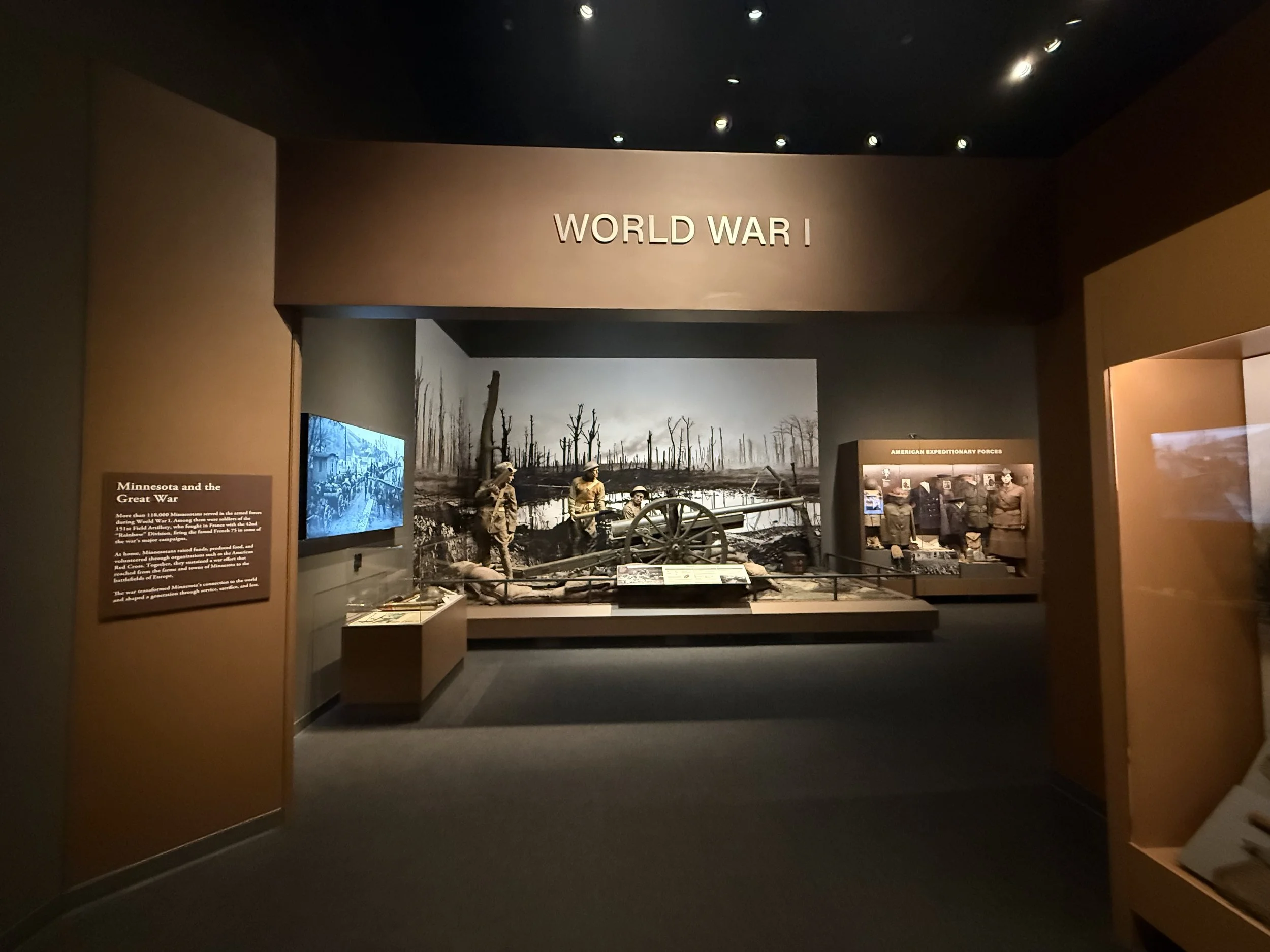
The museum galleries became the fullest expression of a visual language I had been developing for years. This was the opportunity to take what had lived in print, digital, video and campaign materials and translate it into a physical environment at an entirely different scale.
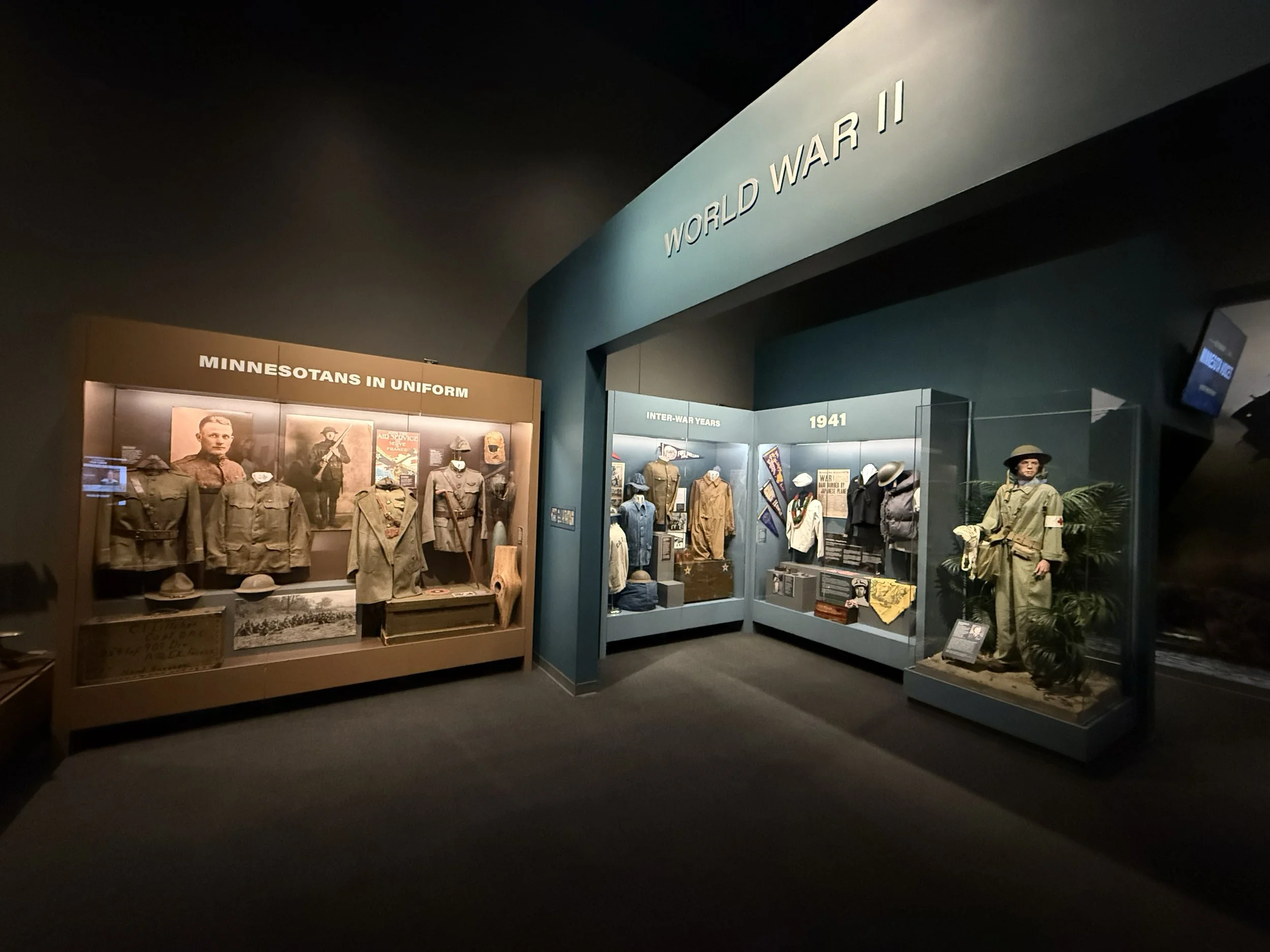
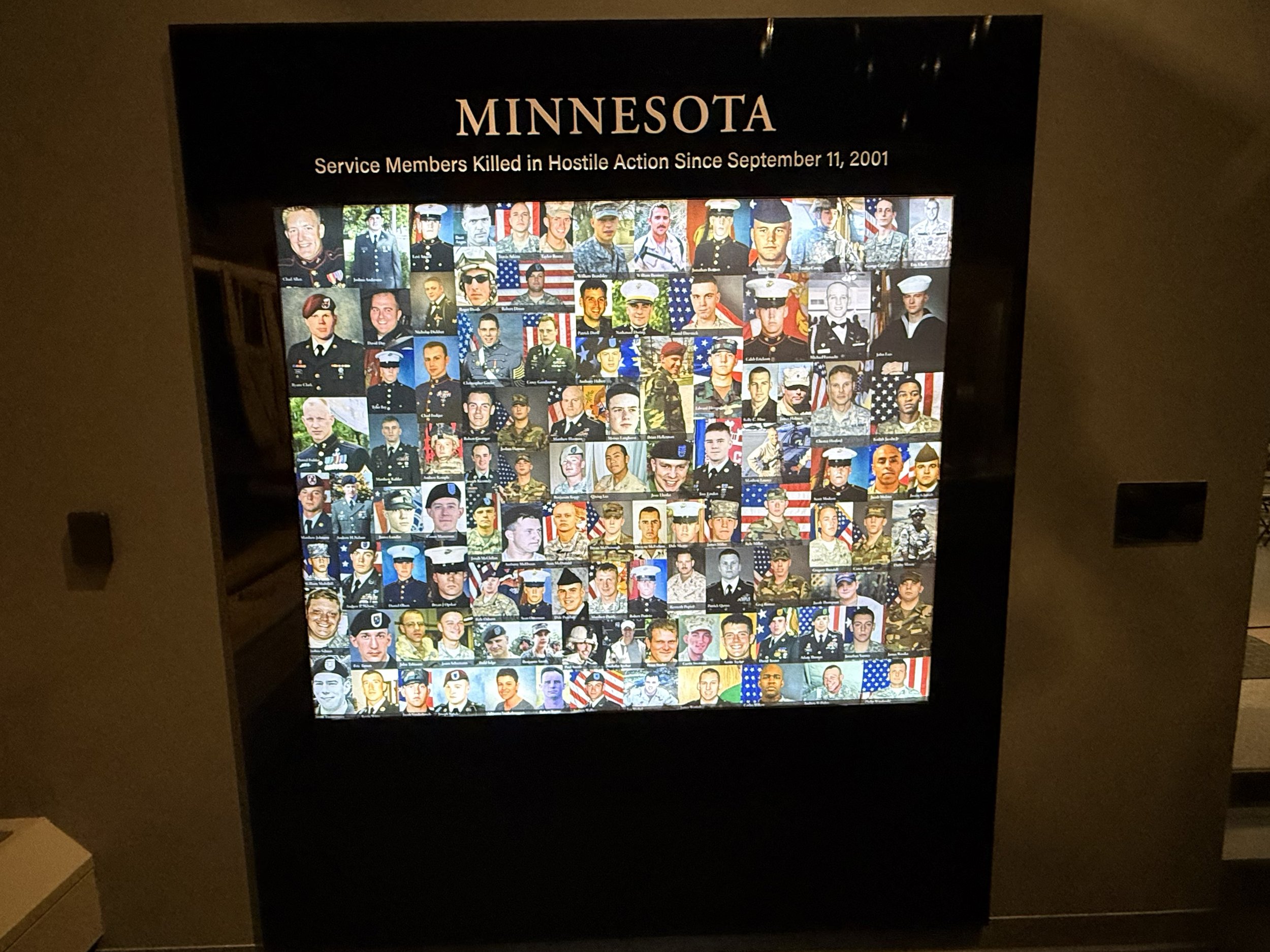
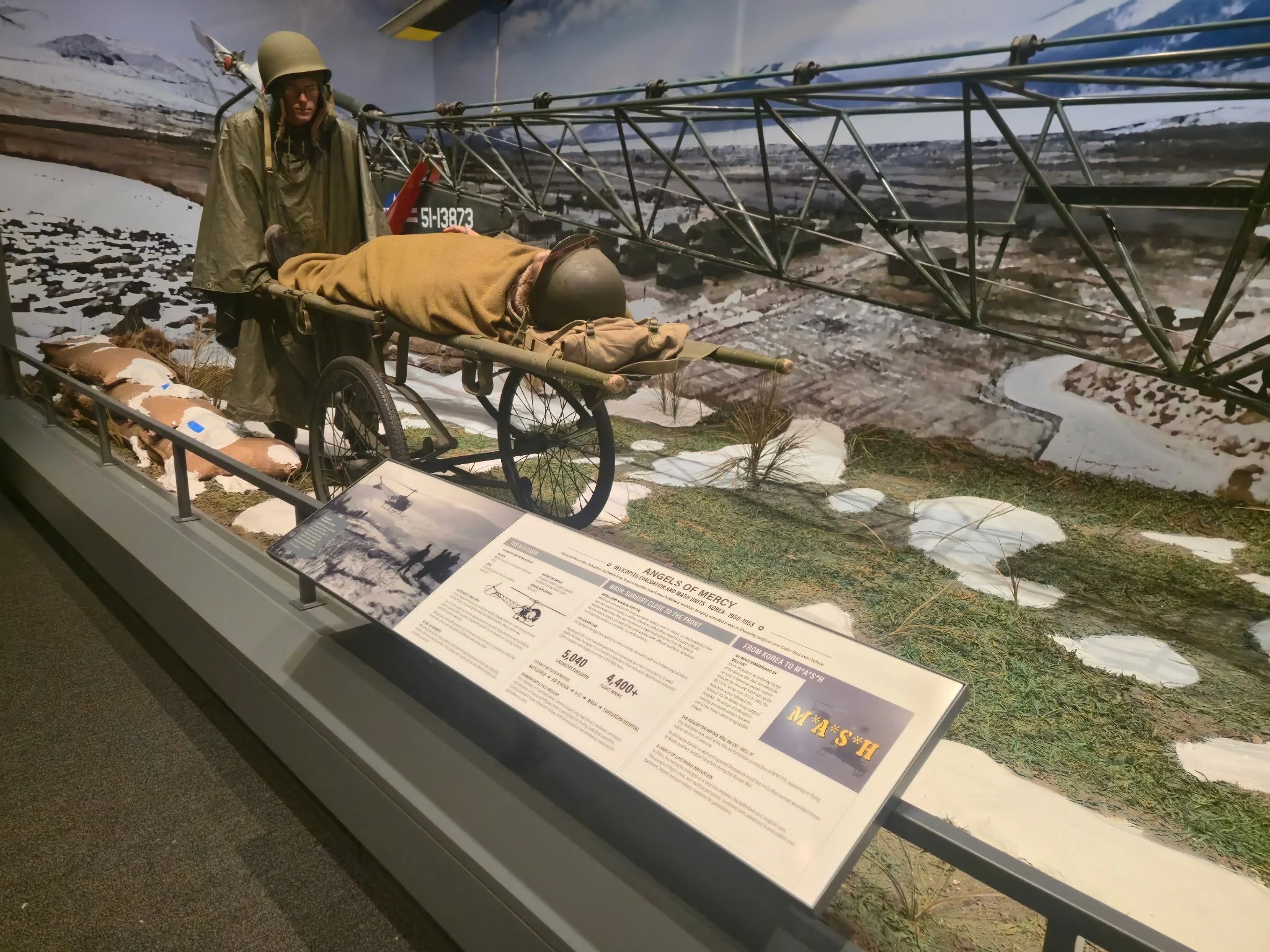
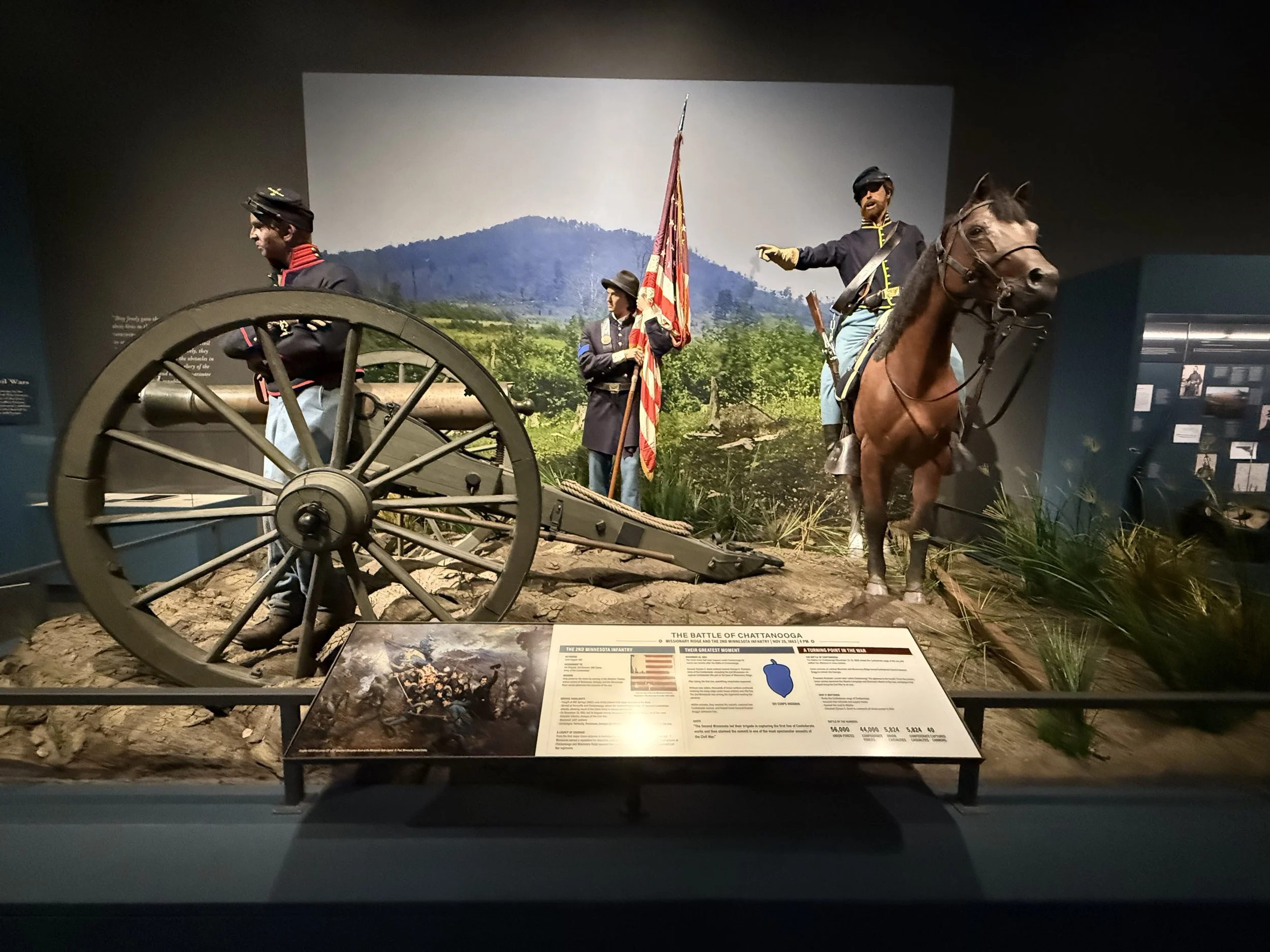
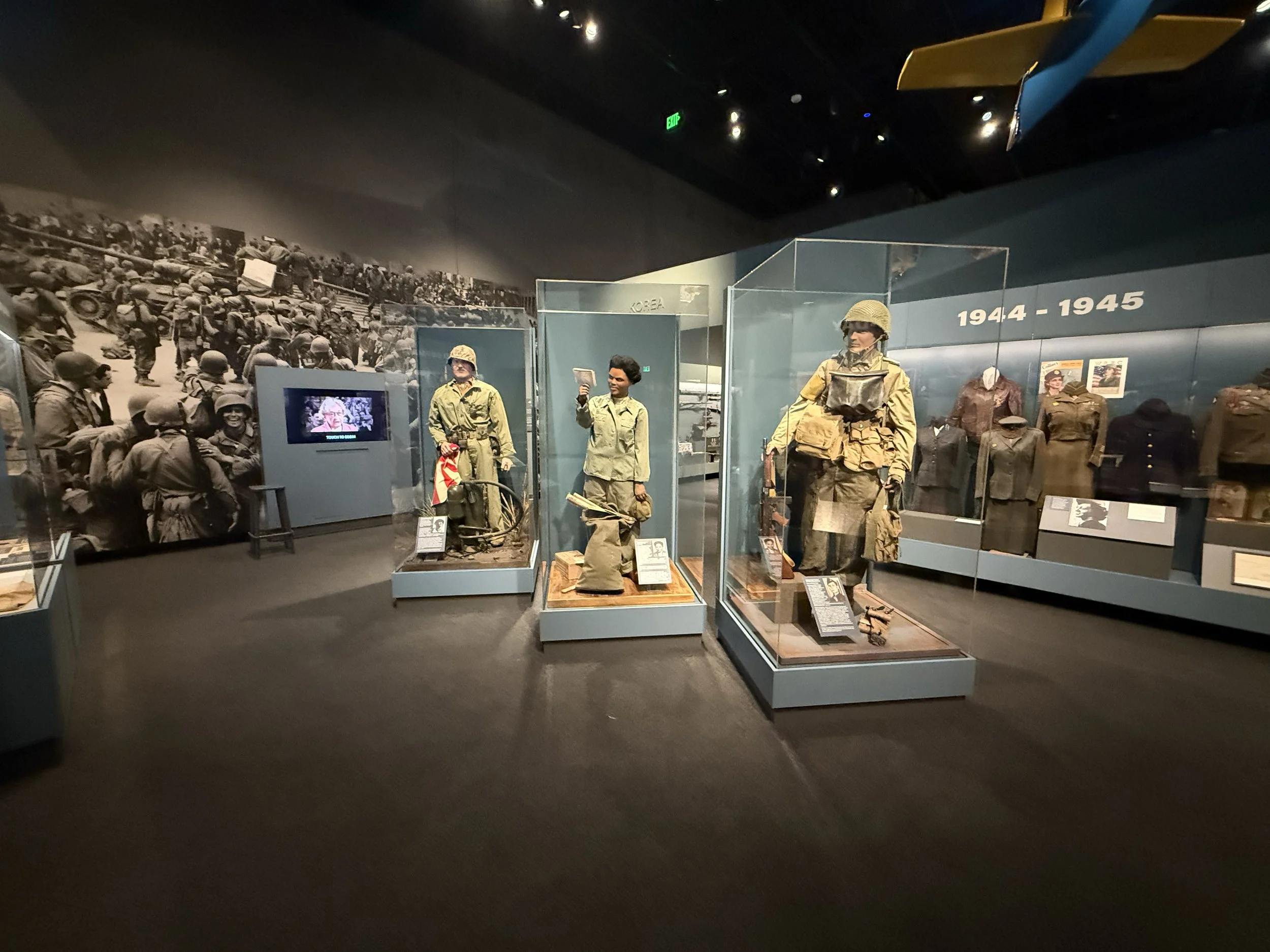
Working closely with museum leadership, historians, exhibit professionals and an exceptionally talented team, I developed and led key elements of the visual direction throughout the galleries, including color, typography, textures, large-scale murals, historical imagery and the visual treatment of thousands of photographs and archival images.
Every decision had to work in service of the history. Color could establish a sense of time and place. Scale could turn a photograph into an immersive experience. Texture and typography could create atmosphere and continuity. Historical images could become deeply human points of connection.
The objective was never simply to decorate the galleries.
It was to help history feel present.
Building a Visual Language for History
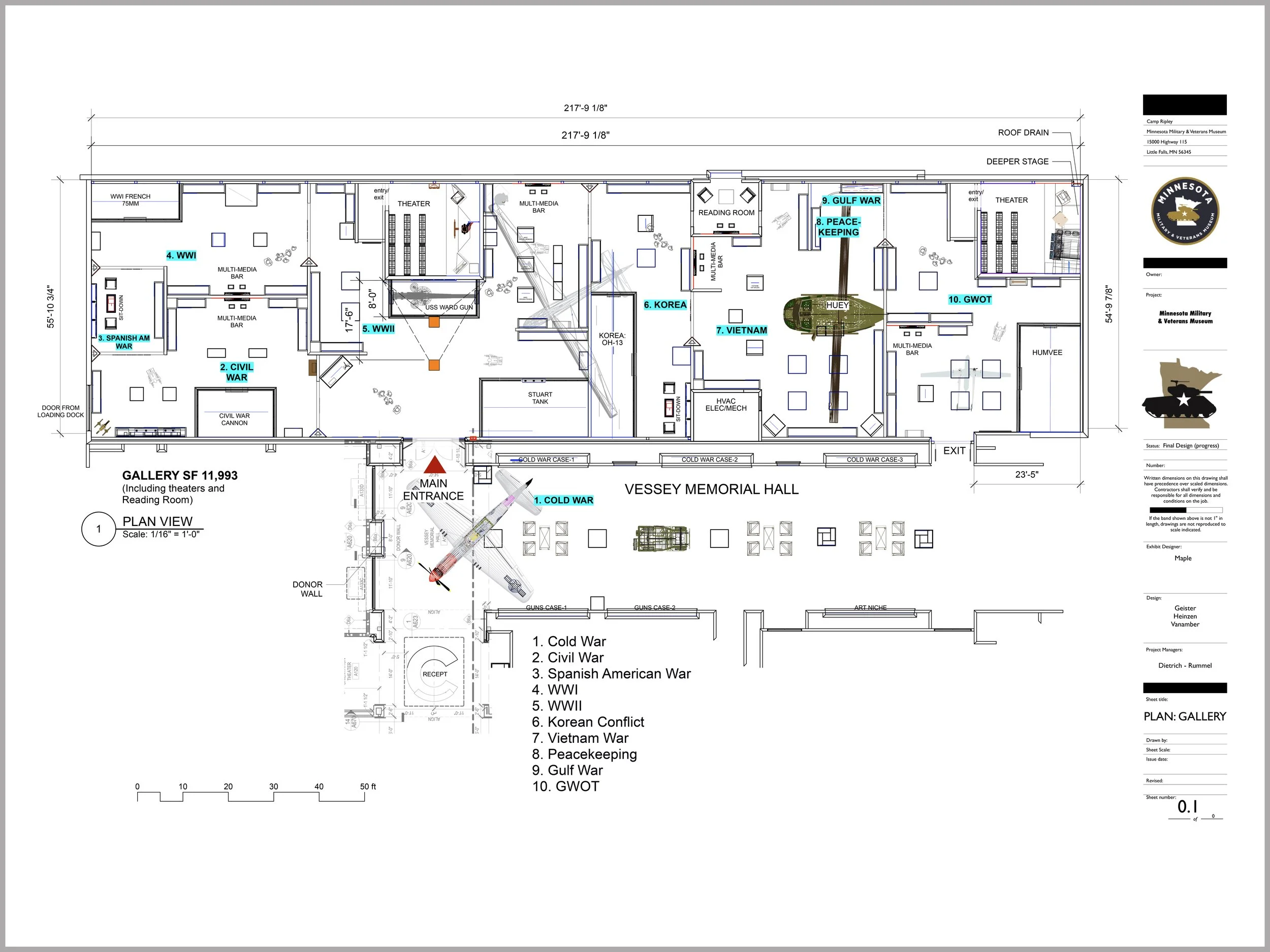
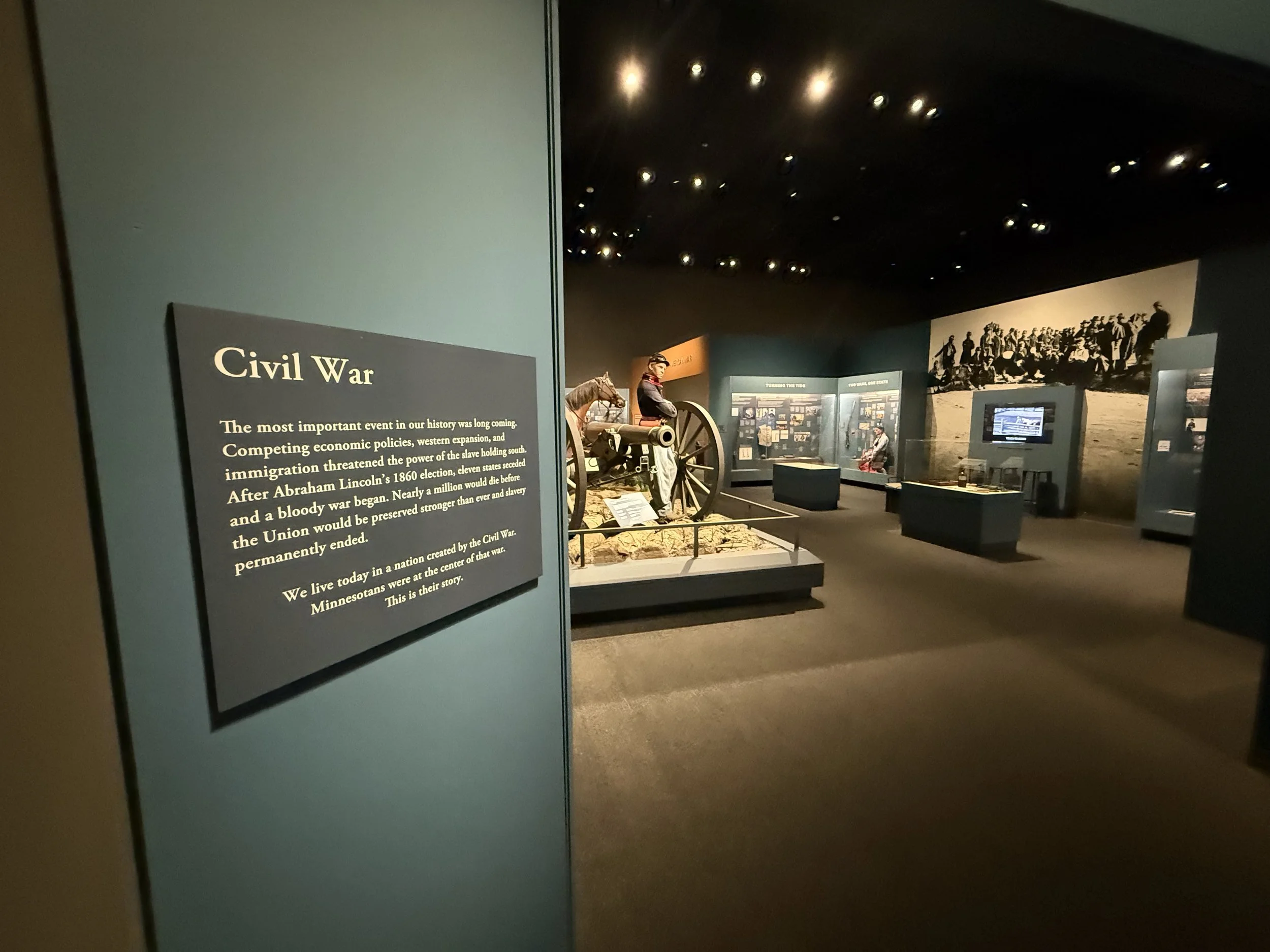
The museum spans generations of Minnesota service, from the Civil War through conflicts and missions around the world and into the present day.
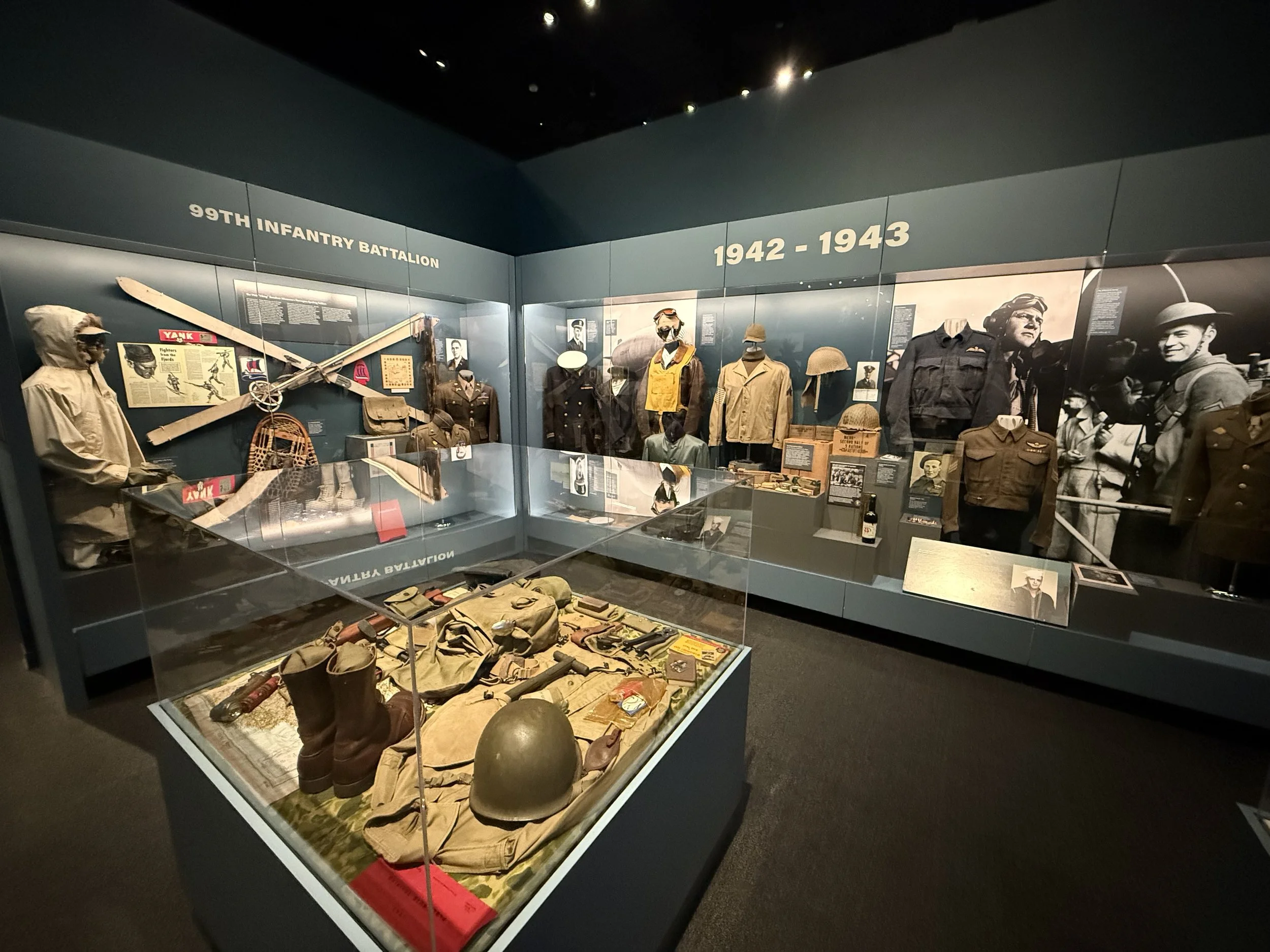
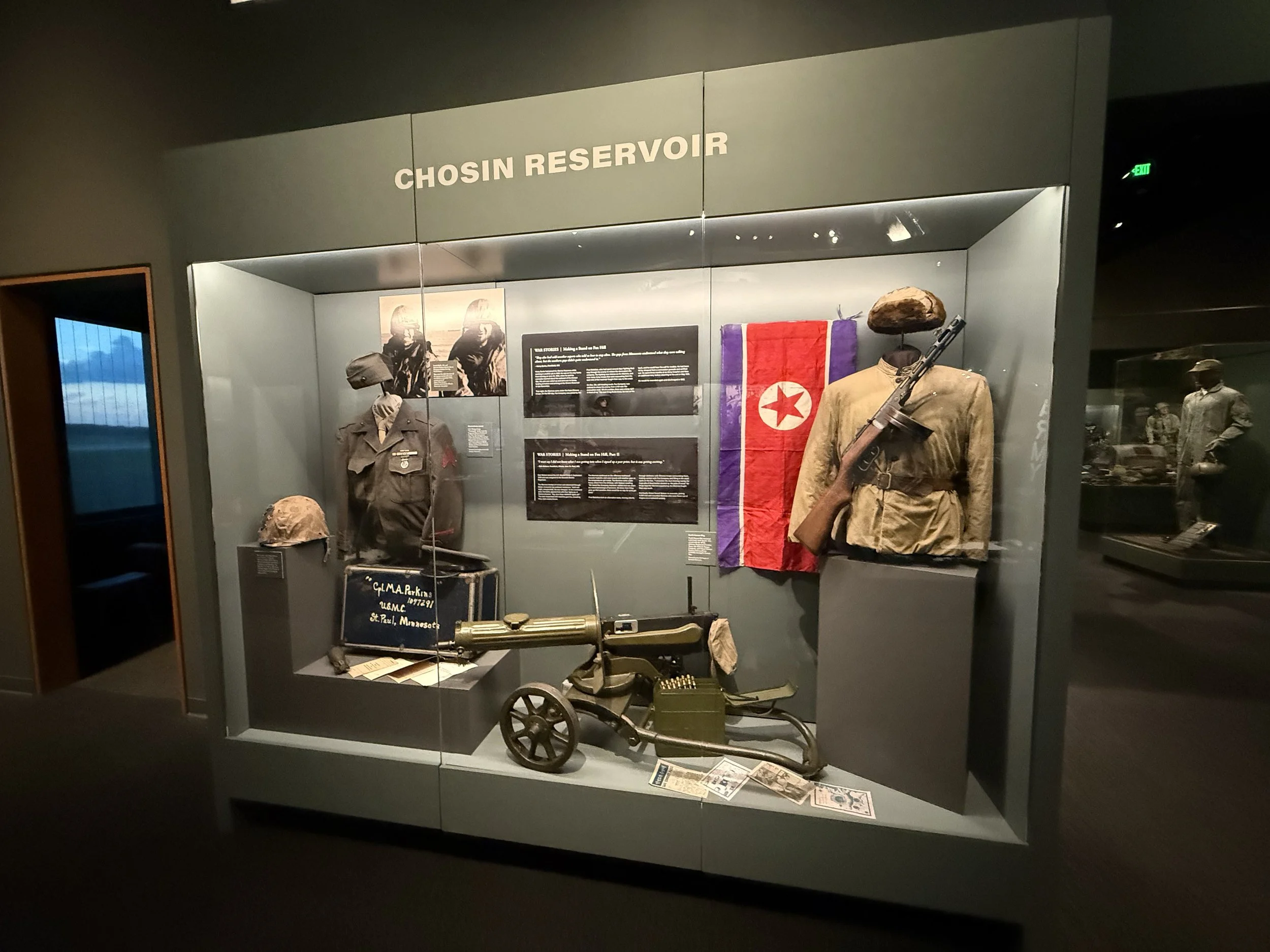
Each period has its own visual character. Its own technology. Its own photographic record. Its own emotional weight.
The challenge was to create environments that could distinguish those stories while still feeling like parts of one museum.
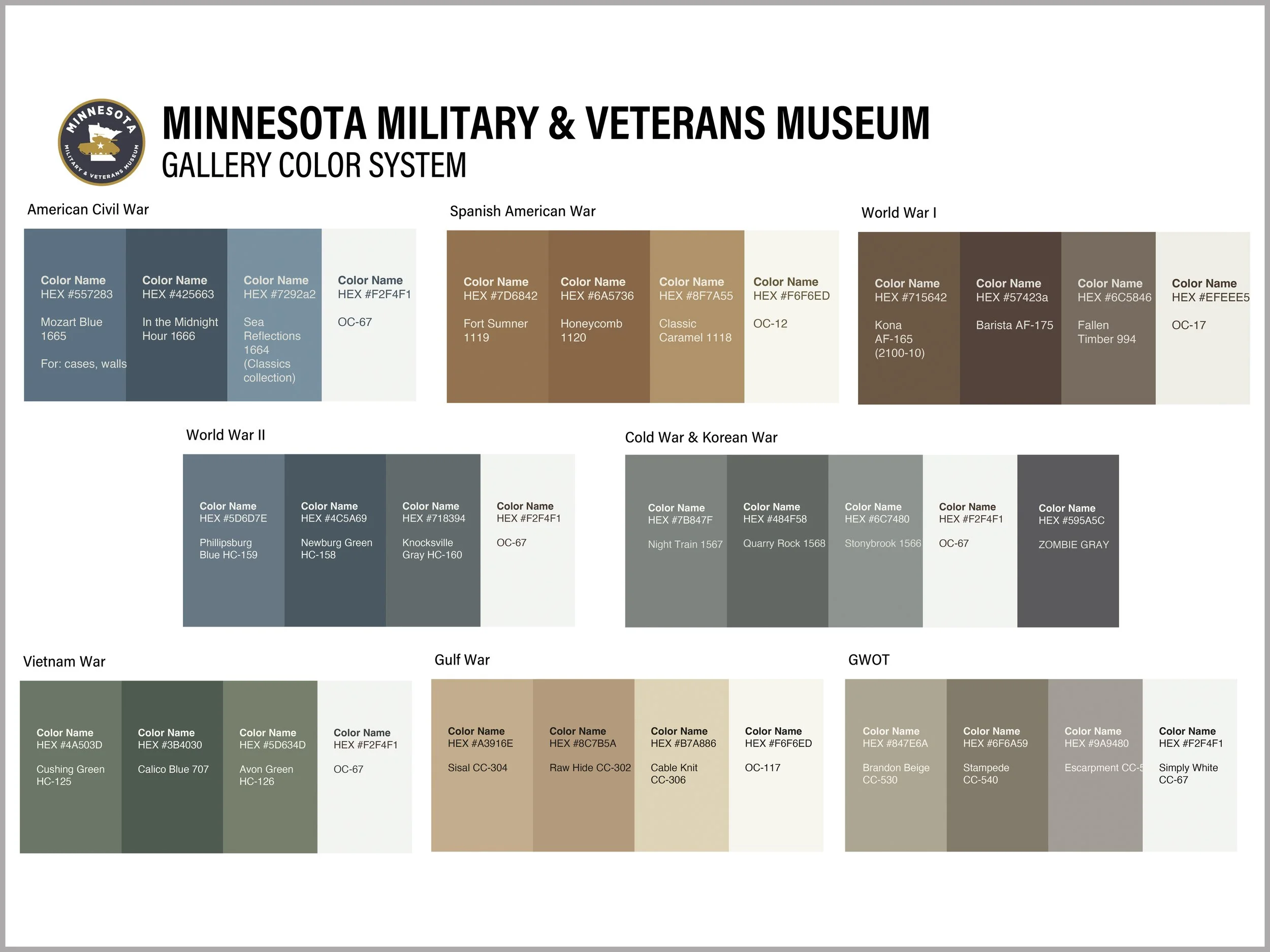
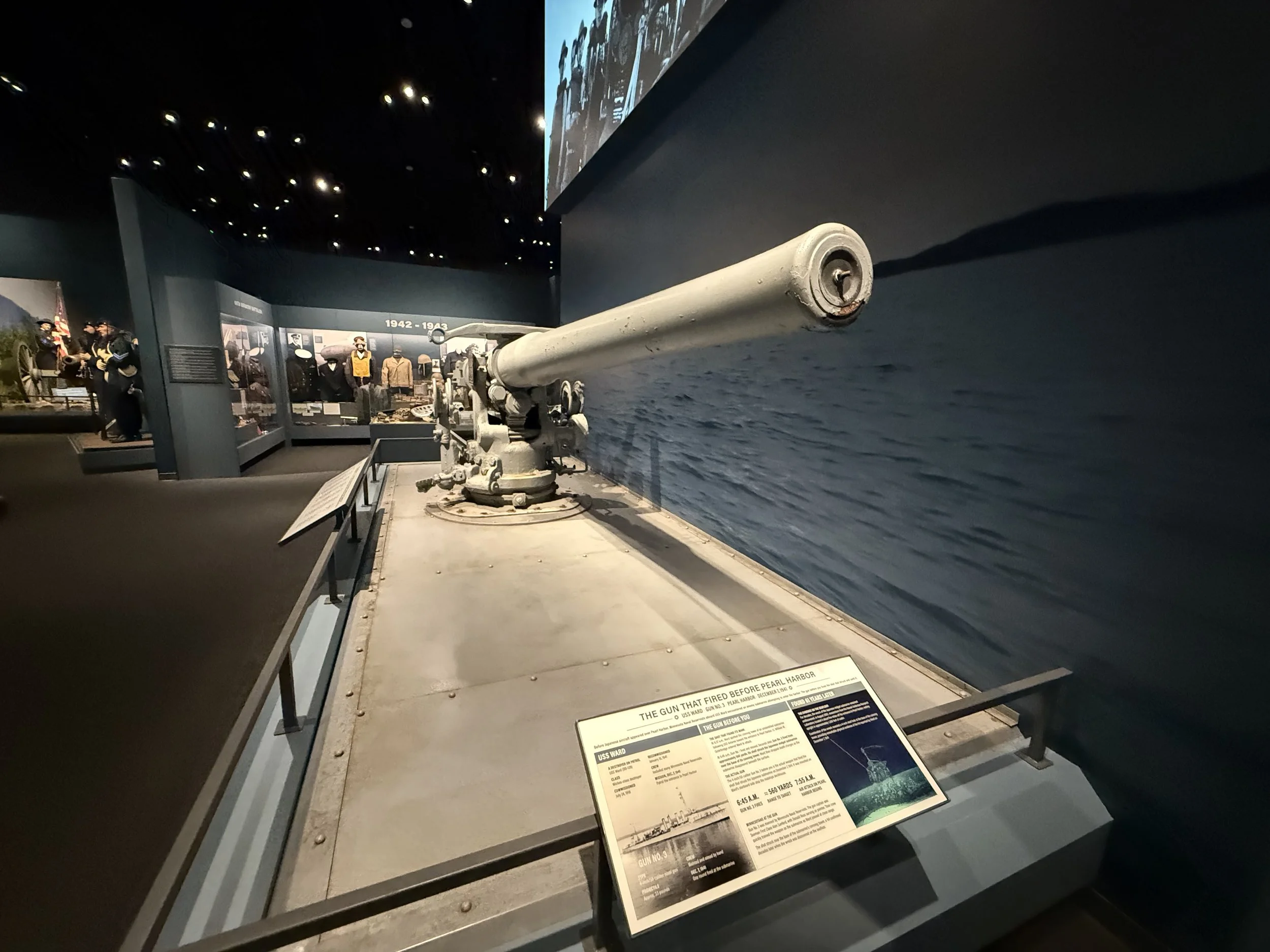
Color and typography became important parts of that language, along with texture, scale and imagery. Rather than relying on a single visual treatment throughout the museum, I developed a palette that could shift as visitors moved through different periods of history while still creating a sense of continuity across the larger experience.
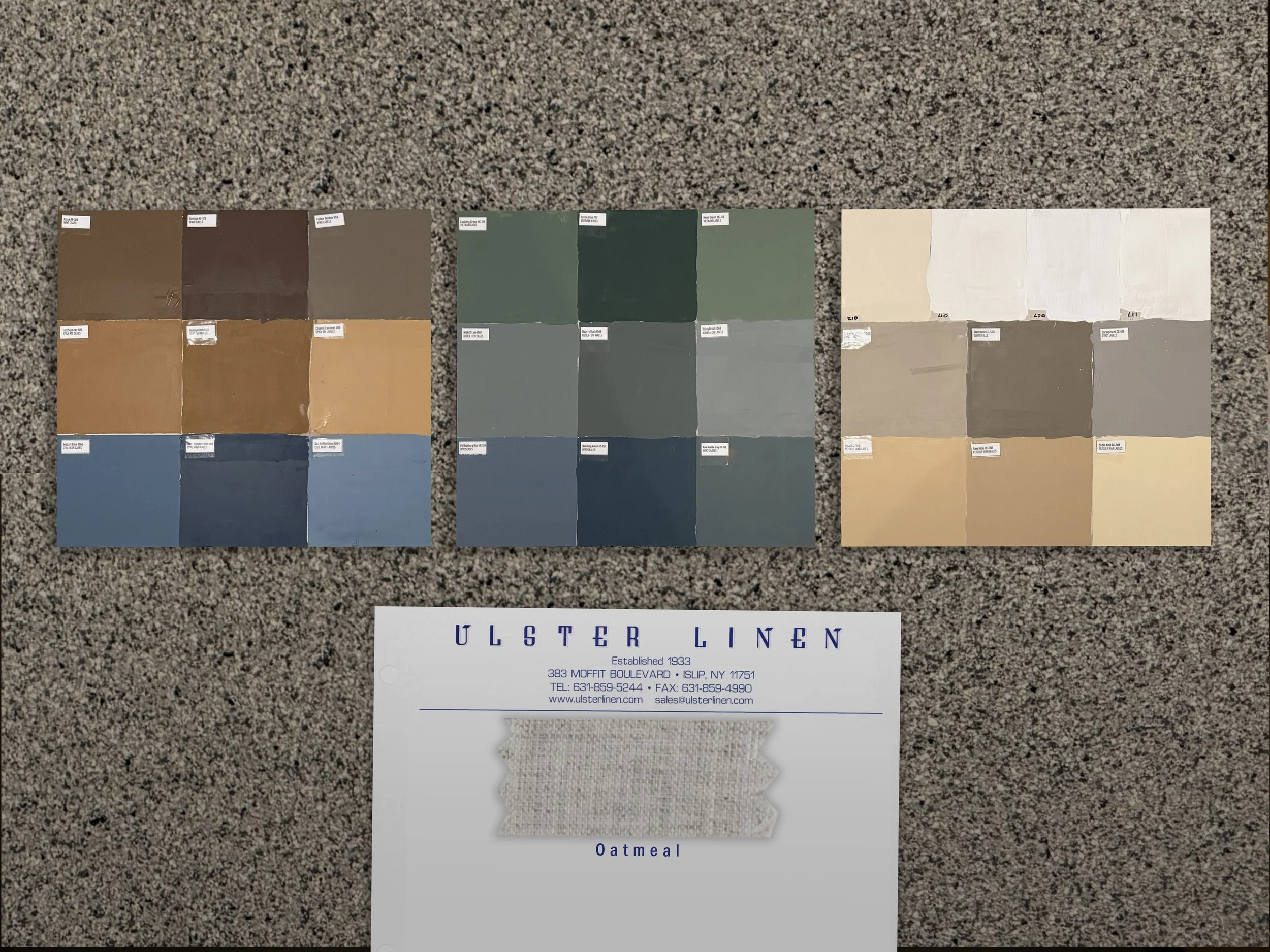
Finding those colors became a surprisingly hands-on process. I spent considerable time testing Benjamin Moore paints on drywall swatches in my garage, comparing colors and combinations and seeing how they actually behaved on a physical surface. Colors that looked right on a screen or a small paint chip could feel completely different when applied at scale.
Those experiments helped shape the palette that ultimately moved from my garage walls to the museum galleries.
Typography, texture and imagery were developed with the same intent. Each needed to help establish a sense of time and place without turning the galleries into theatrical recreations. Together, these elements create subtle transitions in atmosphere as visitors move through the museum, supporting the historical narrative while allowing the artifacts, photographs and individual stories to remain at the center.
Thousands of Images. One Story.
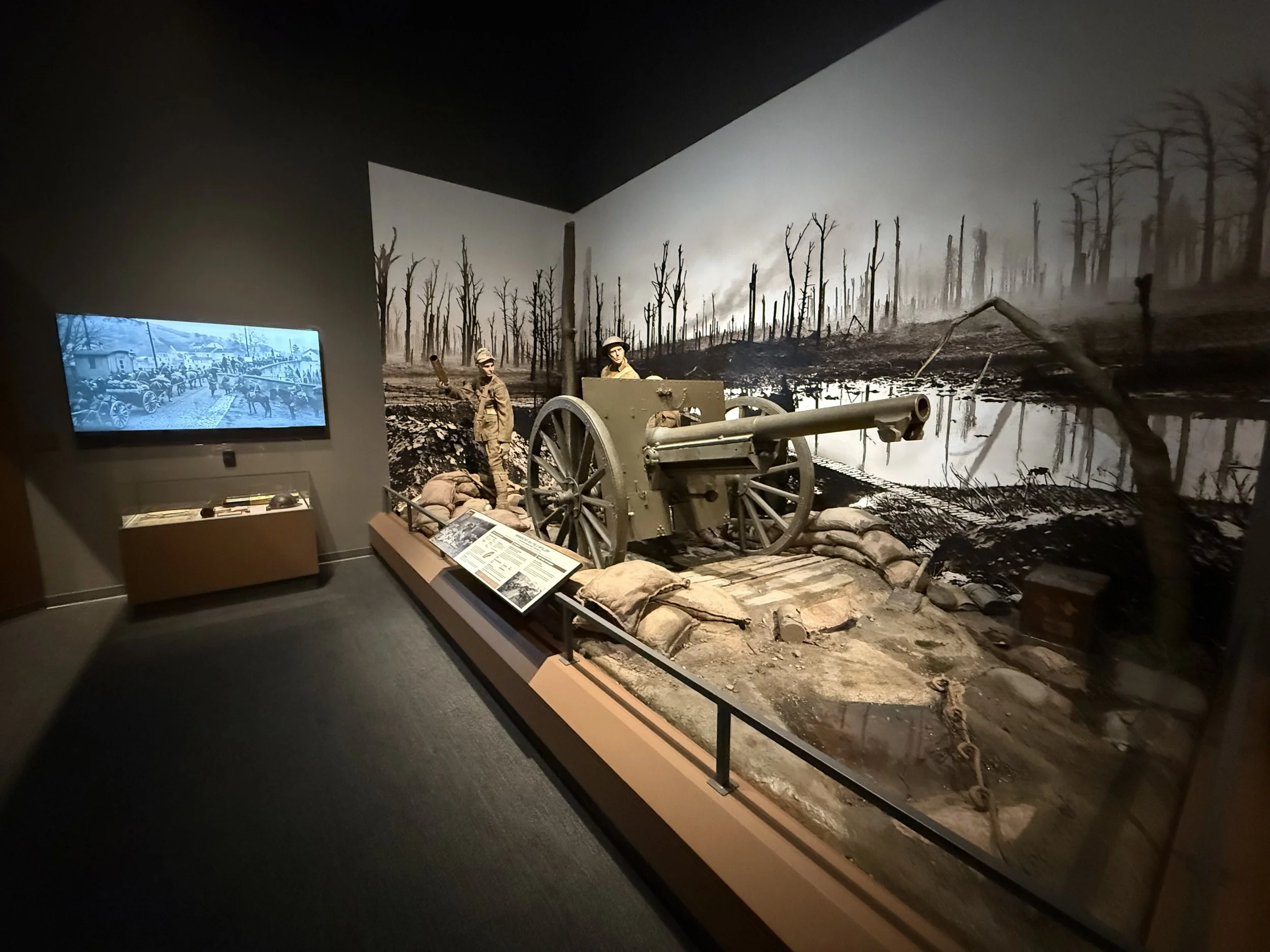
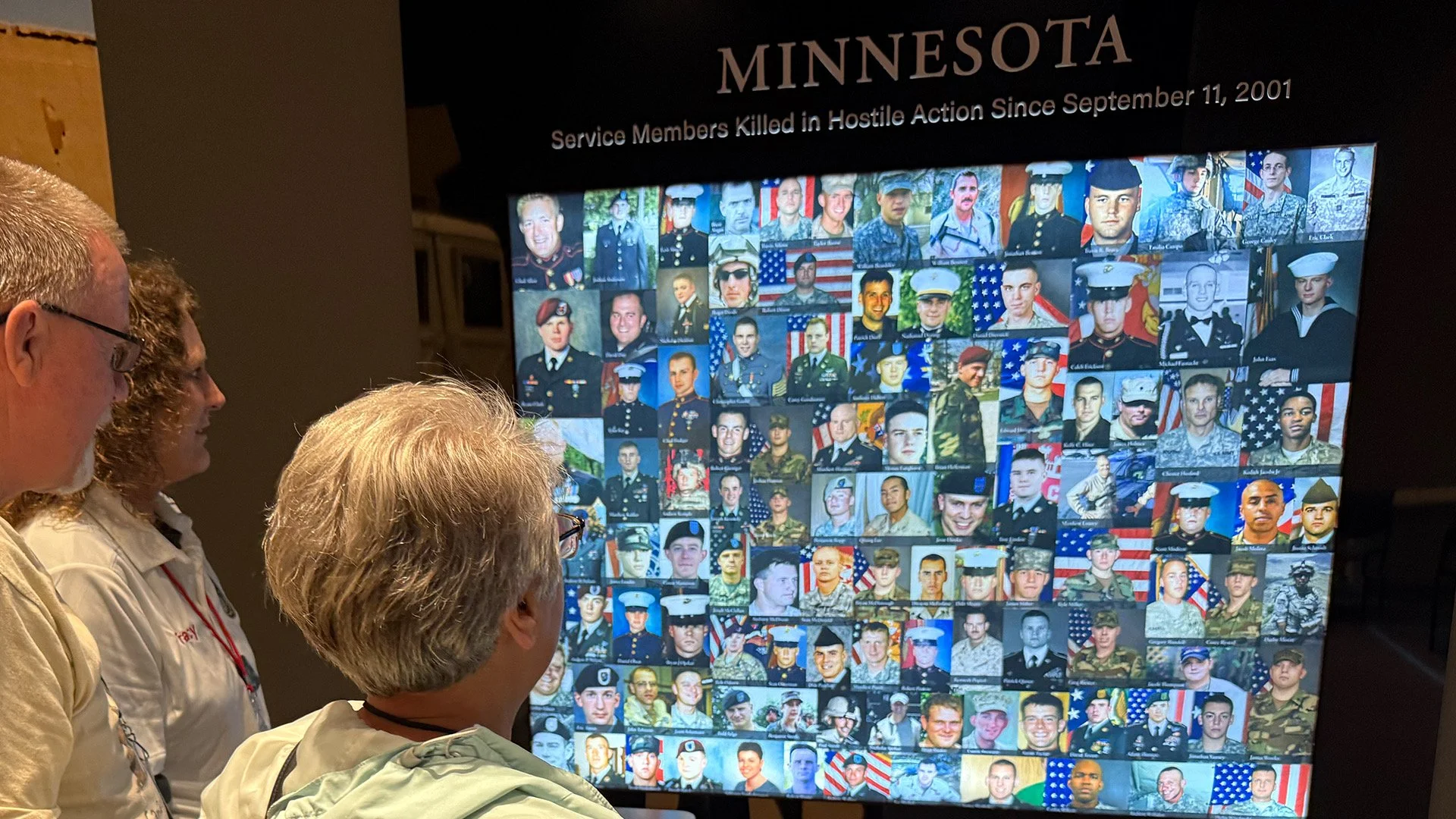
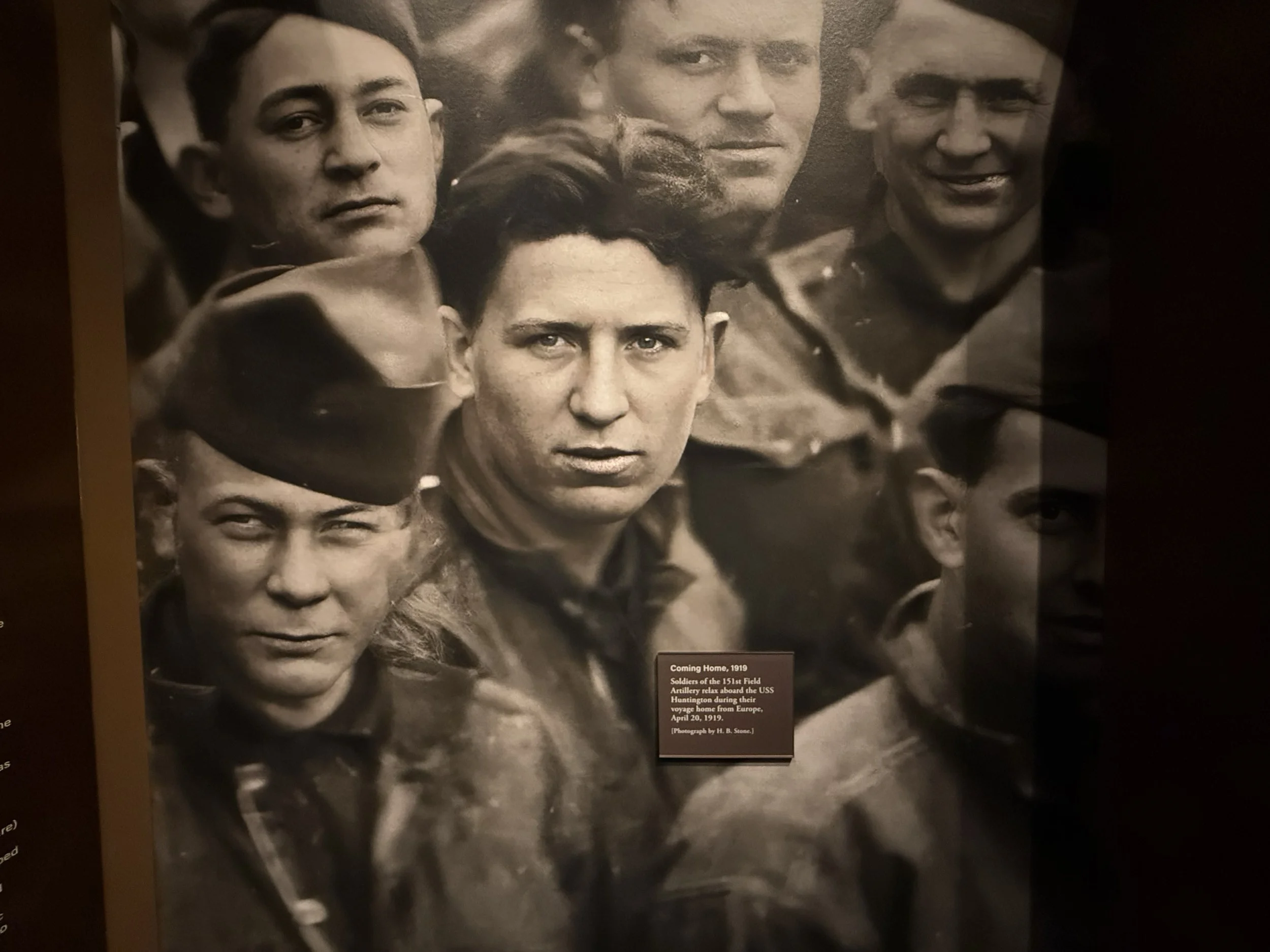
Photography is one of the most powerful elements in the museum.
Thousands of historical images had to be considered not simply as archival material, but as storytelling elements.
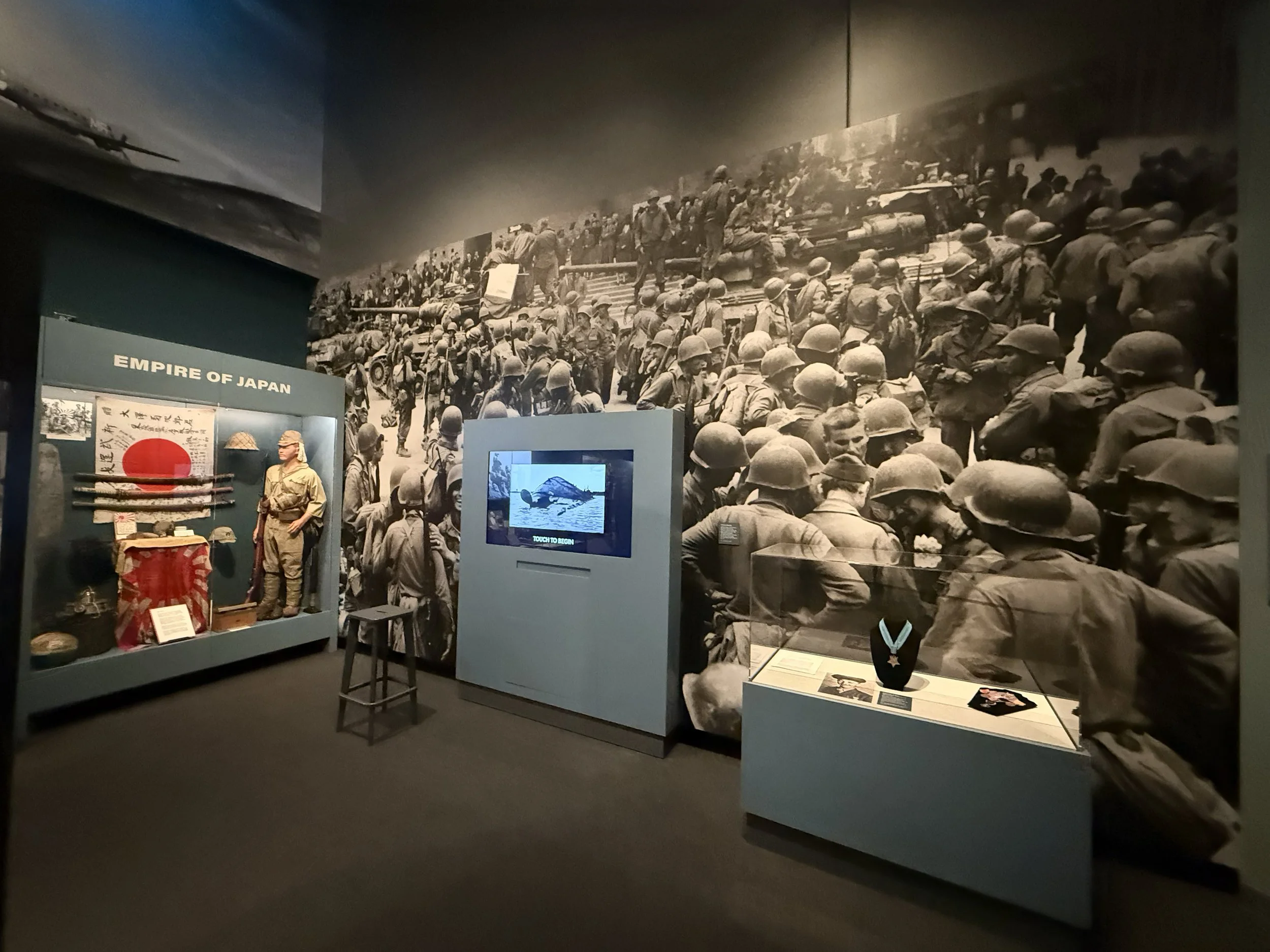
Some needed to provide context. Others needed to reveal the humanity behind an event. Some became intimate details. Others needed to command an entire wall.
That required extensive work with image selection, composition, scale, cropping, tonal treatment and placement, always with respect for the historical record and the people represented.
At times, a photograph that may have existed for decades as a relatively small archival image became something entirely different when brought into the physical environment.
A face could become 20 feet tall.
A moment captured generations ago could suddenly surround a visitor.
History at Human Scale
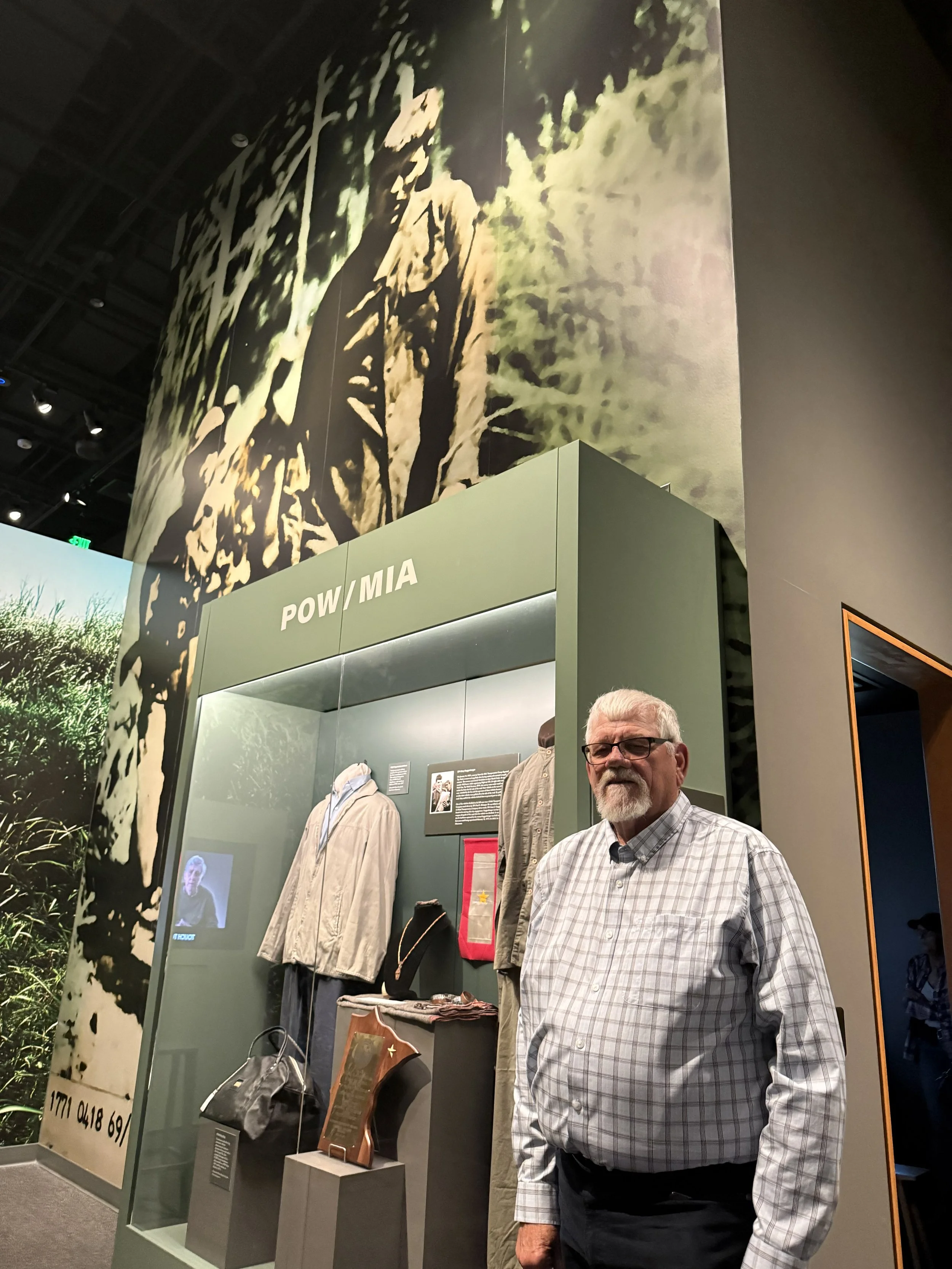
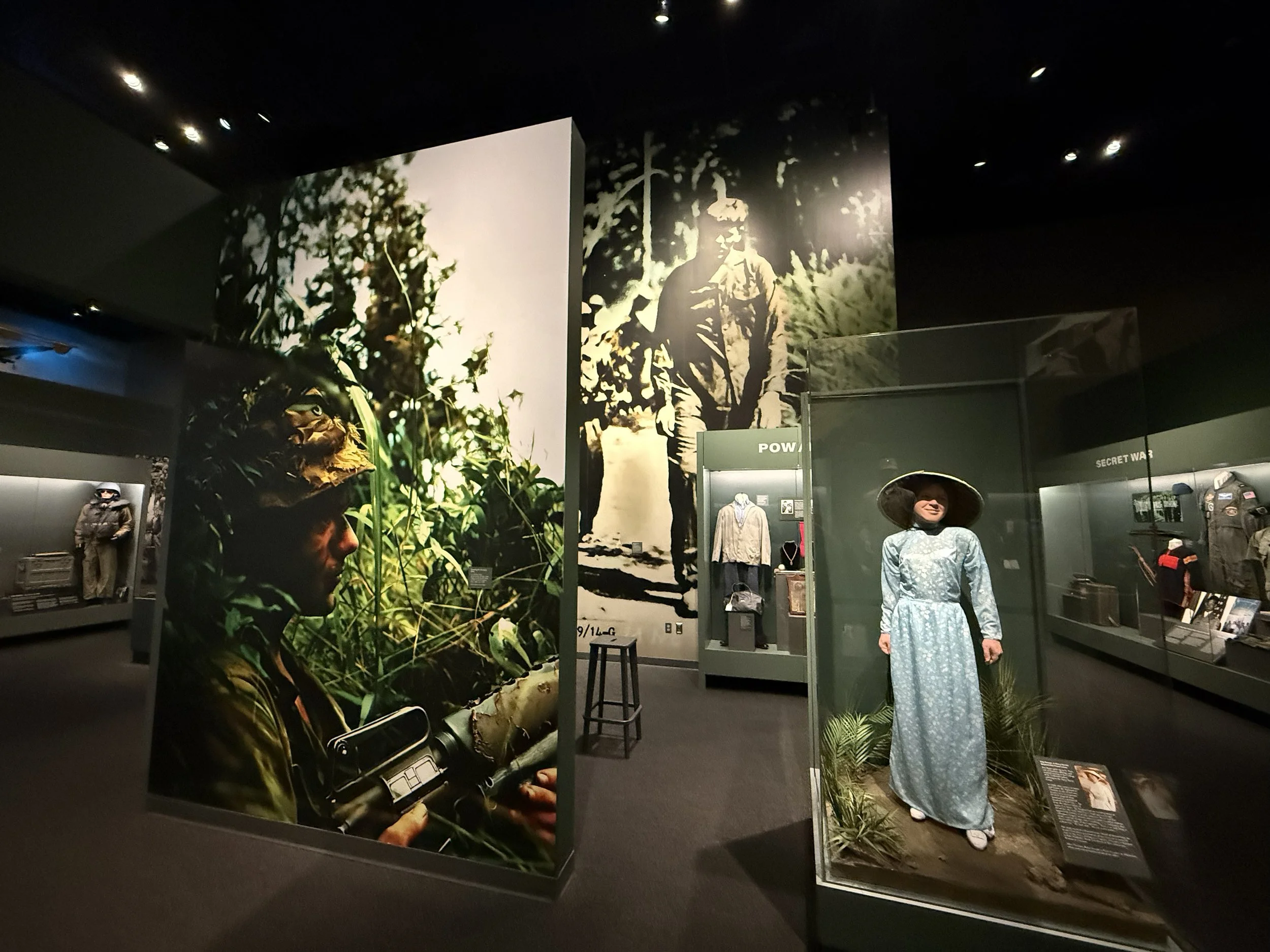
One of the most meaningful examples of this work began with a historic photograph of American prisoners of war in North Vietnam. I was immediately drawn to the image and proposed taking it far beyond its original scale, transforming it into a nearly 20-foot mural that would immerse visitors in the moment.
Bringing the image to that size required considerable work. I spent many hours carefully adding color and detail to the original photograph, working to bring greater depth and life to the scene while respecting the integrity of the historic image. At that scale, every face and detail mattered.
Then came an unexpected discovery.
While working with the museum's curator, I learned that one of the men prominently pictured in the photograph was Gary Guggenberger, a Minnesota Veteran from Bemidji. Even more remarkable, Gary was still very much a part of Minnesota's Veterans community and had spent years advocating for POW/MIA awareness.
Eventually, Gary and his wife had the opportunity to see the finished mural. Watching their emotional reaction to seeing this chapter of his life presented at such an enormous scale was incredibly moving.
Shortly before the museum opened, Gary sought me out and asked if we could spend some time together at the mural. Standing beneath the nearly 20-foot image of himself, he shared in remarkable detail his experience as a prisoner of war in North Vietnam.
It was an unforgettable conversation, and getting to know Gary has given the image a meaning I never could have anticipated when I first chose it for the wall.
For years, I had worked with photographs, compositions, colors, walls and historical material. Standing there with Gary brought the purpose of that work into sharp focus.
These aren't simply images. They are people's lives.
Design in Service of the Story
Museum design presents an unusual creative responsibility.
The work has to be visually powerful without becoming more important than the history. It has to help visitors navigate enormous amounts of information without overwhelming them. And it has to create emotional moments without manufacturing emotion that isn't already present in the stories themselves.
That principle guided my contribution throughout the galleries:
Let design serve the story.
Color establishes place and period.
Texture creates atmosphere.
Scale creates emphasis.
Imagery creates human connection.
Together, those elements help transform historical information into an experience visitors can walk through.
From Identity to Environment
There is something especially meaningful about seeing this work in the context of my larger involvement with the Minnesota Military & Veterans Museum.
I helped develop the museum's visual identity and capital campaign materials.
I built its digital presence.
I created broadcast and motion work that helped introduce the museum and its mission to audiences across Minnesota.
And ultimately, I had the opportunity to carry that visual thinking into the museum itself.
What began years earlier as a brand and an aspiration now exists at architectural scale, across walls, galleries, murals and thousands of images.
Walking through the completed galleries for the first time was overwhelming.
Not because of any single design element, but because of the enormity of what the entire team had accomplished.
Historians, museum professionals, Veterans, families, researchers, fabricators, donors and countless others contributed extraordinary knowledge and care to this place.
The result is something Minnesota can be proud of.
Being trusted to help shape how these stories are seen and experienced has been one of the most meaningful creative opportunities of my career.
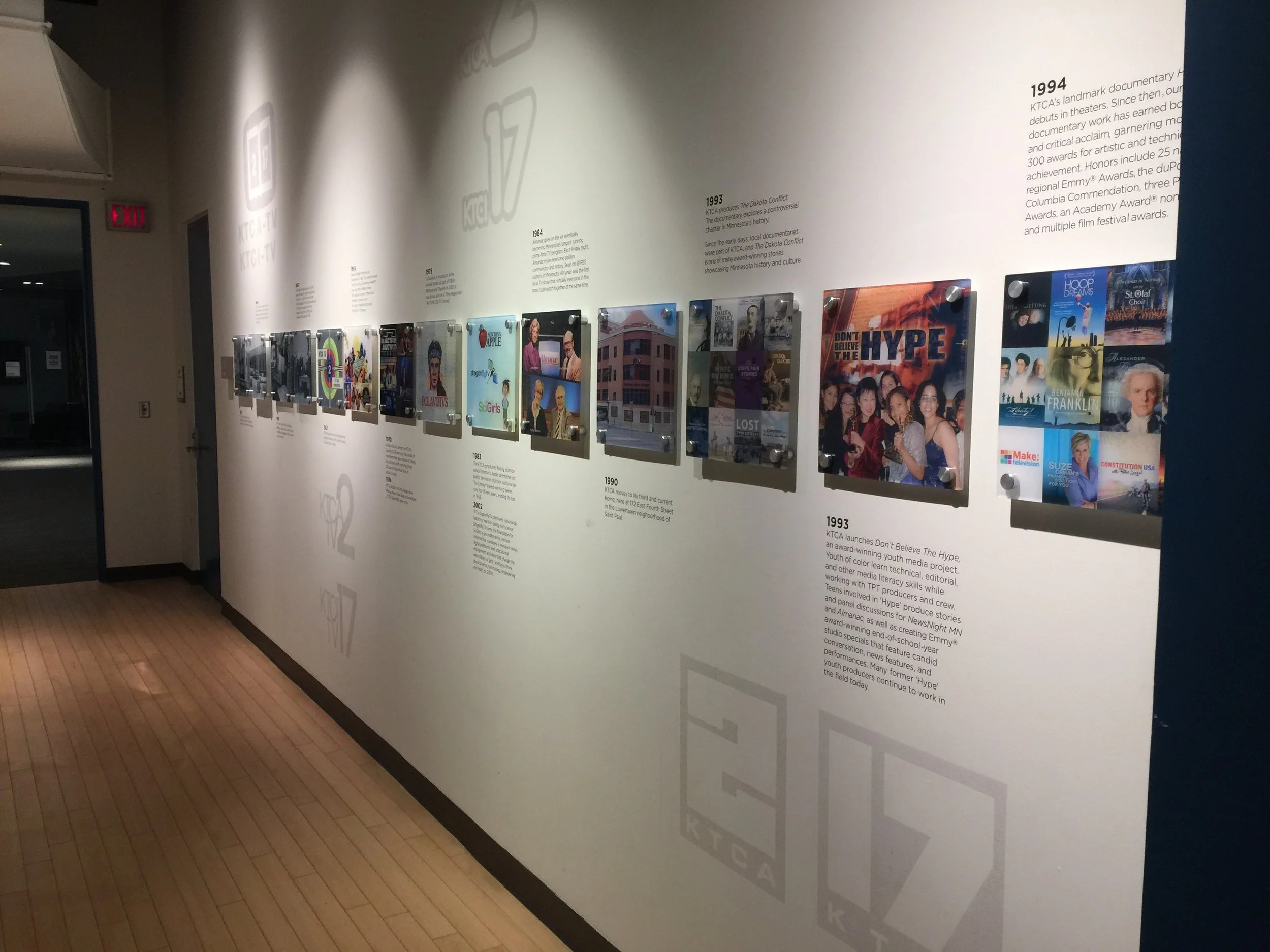
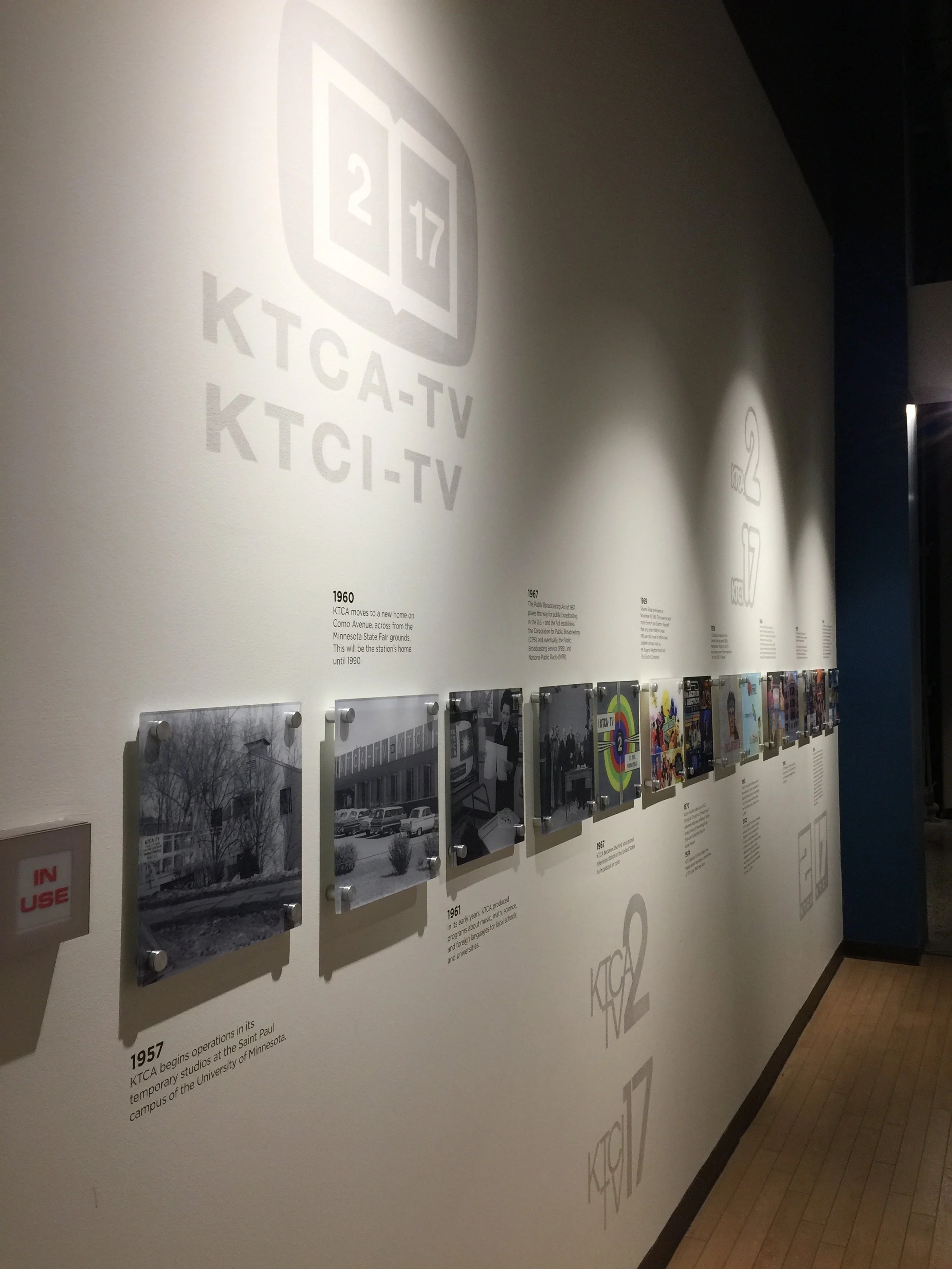
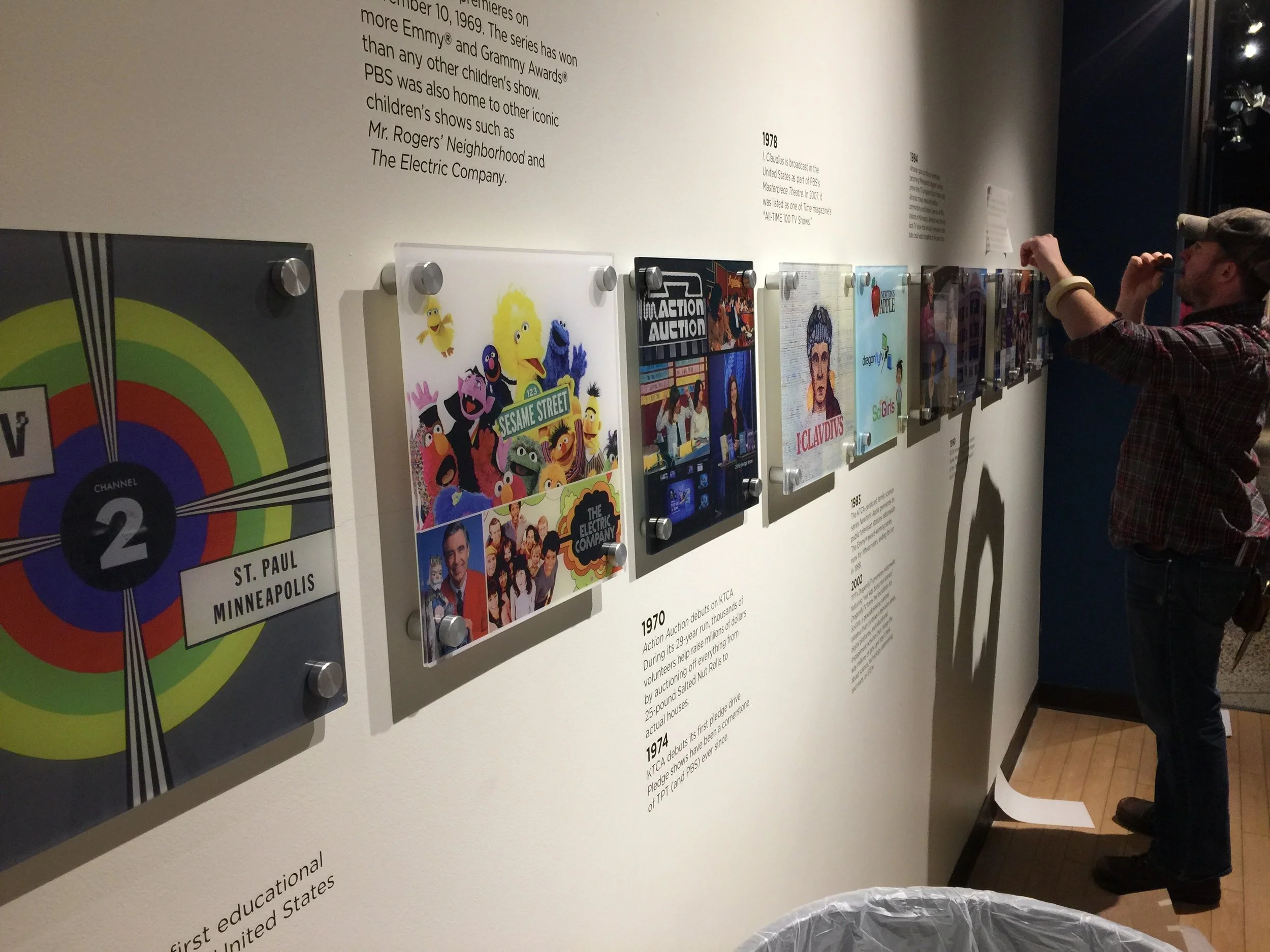
History Hall - Organization Timeline
Twin Cities PBS | Outside Studios A & B
Overview
Design and lead the creation of a permanent timeline installation chronicling the rich history of Twin Cities PBS (KTCA), from its founding in 1957 to the present day. Needed to be Installed along the main corridor outside Studios A and B. The timeline tells the story of the station's evolution—serving as both a visual landmark and a narrative experience for guests and staff.
Challenges & Opportunities
This project began with an idea I pitched to senior management: instead of handing out printed brochures during studio tours, why not turn the high-traffic hallway into a dynamic visual story of the station’s legacy?
As members of the Creative Services team, we had a deep understanding of both the organization’s history and the development department’s communication needs. The hallway—used on nearly every tour—was the perfect canvas. The timeline highlights significant milestones in 5-year chapters, featuring key content initiatives, recurring themes, branding changes, and logo evolution.
Reaching consensus on what should be included took time. Input was gathered from across departments, and final decisions were made by the President and CEO. The physical space was ideal—not just for its visibility, but also for its scale. At its current pace, the wall could hold another 100 years of history before running out of room.
Approach
Over a six-month period, I led the design process, collaborated with internal stakeholders to refine content, and partnered with a local printer/installer to fabricate and mount the custom panels and typography. The timeline features large logos above and below corresponding years, giving visitors a clear visual sense of the brand’s evolution alongside its programming milestones.
Results
The History Hall timeline was a major success. It has become a meaningful part of station tours, helping visitors and donors connect to the station’s mission. It also serves as a valuable onboarding tool for new employees, offering a clear, accessible view of the organization’s impact over time. And with the timeline now in place, the development team no longer needs to print brochures—the story is quite literally on the wall.
Studio Set Design for Sesame Street Pledge Show
Sesame Street Pledge Show Set – Celebrating 50 Years
Overview
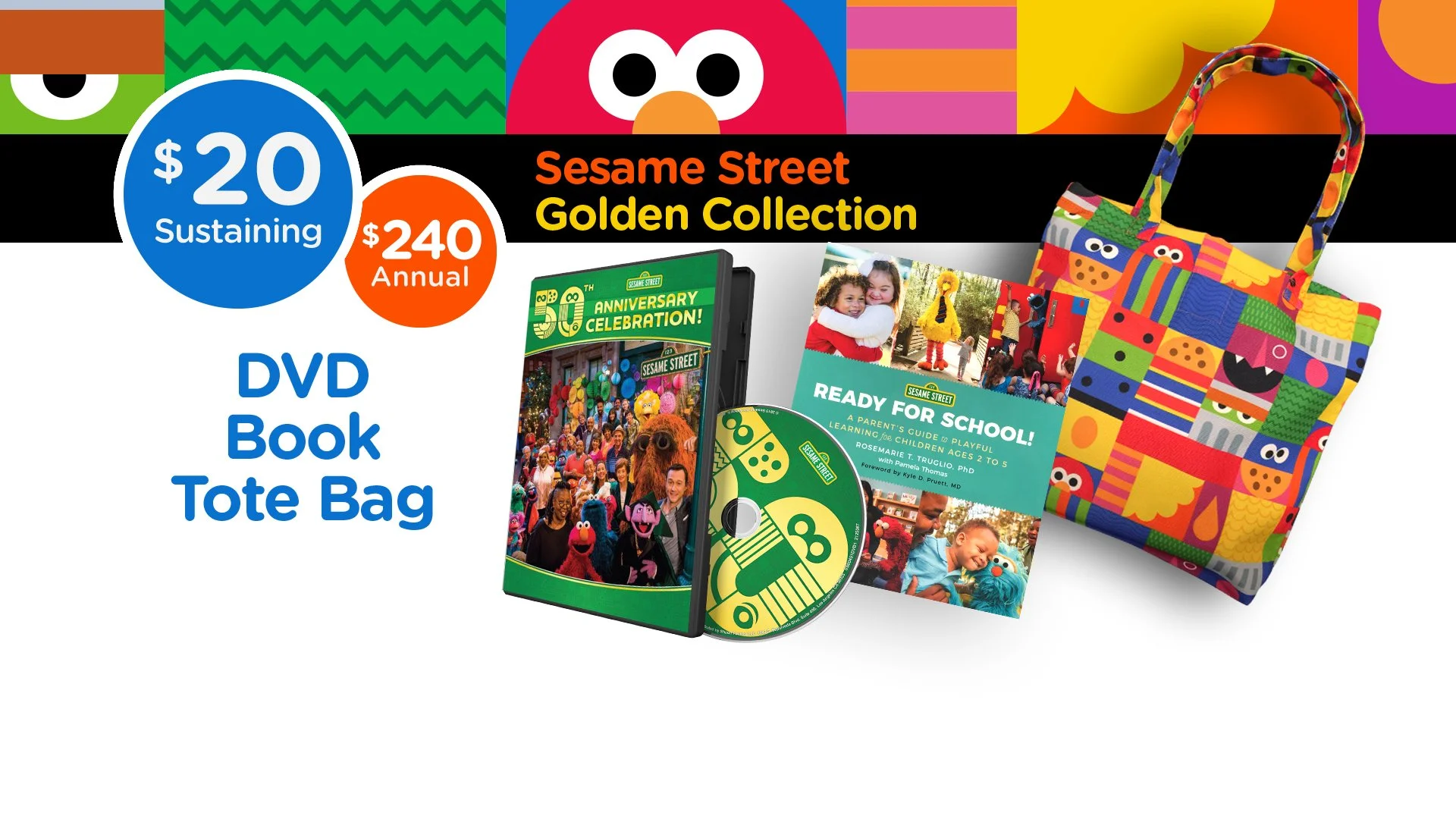
Based entirely on the Sesame Street brand, design a vibrant, large-scale pledge show set and supporting graphics to celebrate Sesame Street’s 50th anniversary. The show was to be recorded in Studio A at Twin Cities PBS—one of the largest production spaces in the region—and distributed nationally to PBS stations to support fundraising efforts.
Challenges & Opportunities
This was a high-profile collaboration with Sesame Workshop, who are understandably protective of their iconic brand. I worked closely with the Executive Producer, Producer, and Sesame Workshop team to ensure every design element—from animated graphics to printed set panels—reflected the joyful spirit of Sesame Street while meeting strict brand standards.
One key challenge was producing oversized set panels that would hold up visually in wide camera shots. We sourced a printer capable of producing foam core panels at nearly 10 feet tall and 4 feet wide to bring the set to life on screen.
Approach
Early design approvals were critical. I front-loaded the design process to allow time for panel production and graphic development, while leaving room for refinements in post-production. All show graphics were optimized for both live studio use and later integration in the edit suite.
Results
The final show was a visual and fundraising success—colorful, playful, and on-brand. Sesame Workshop was pleased with the result, and the program was shared with PBS stations across the country, helping them generate revenue while honoring the legacy of one of the most beloved shows in television history.

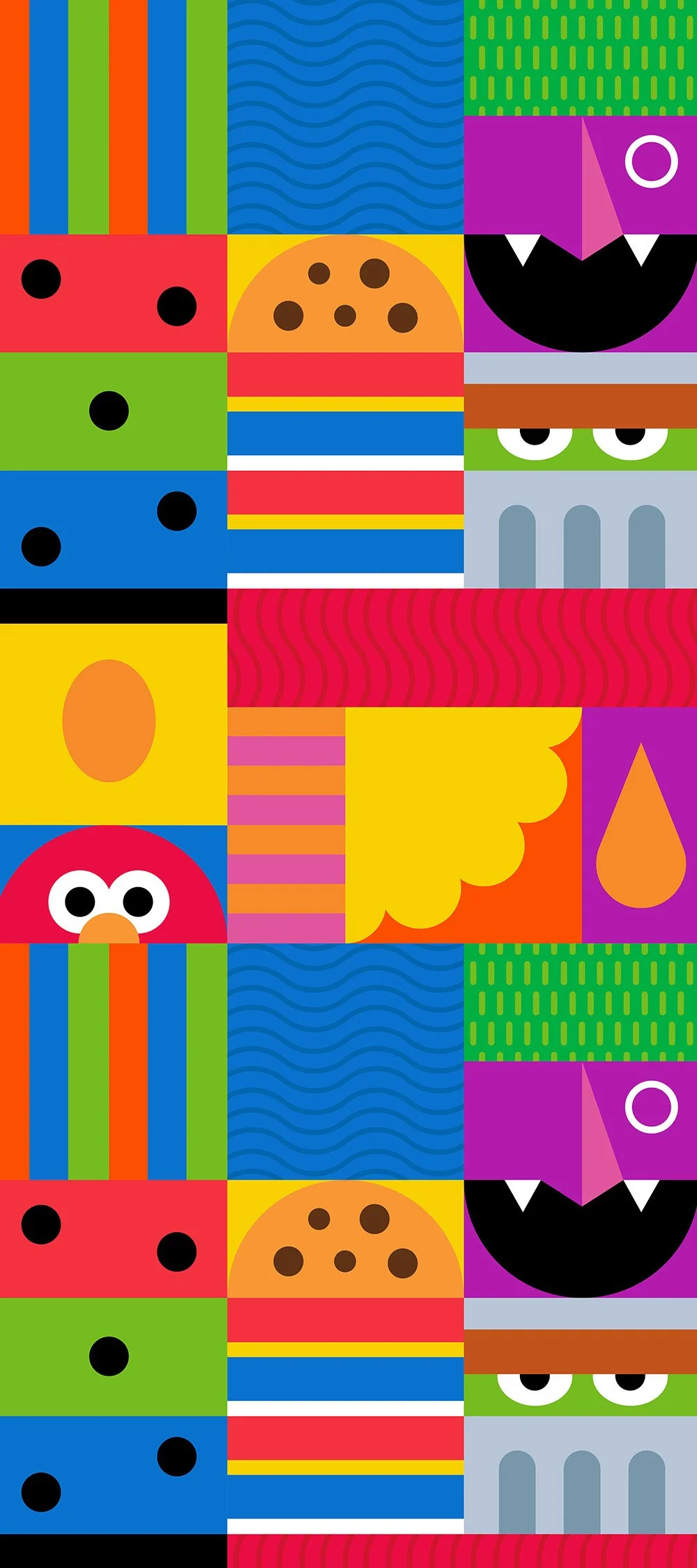

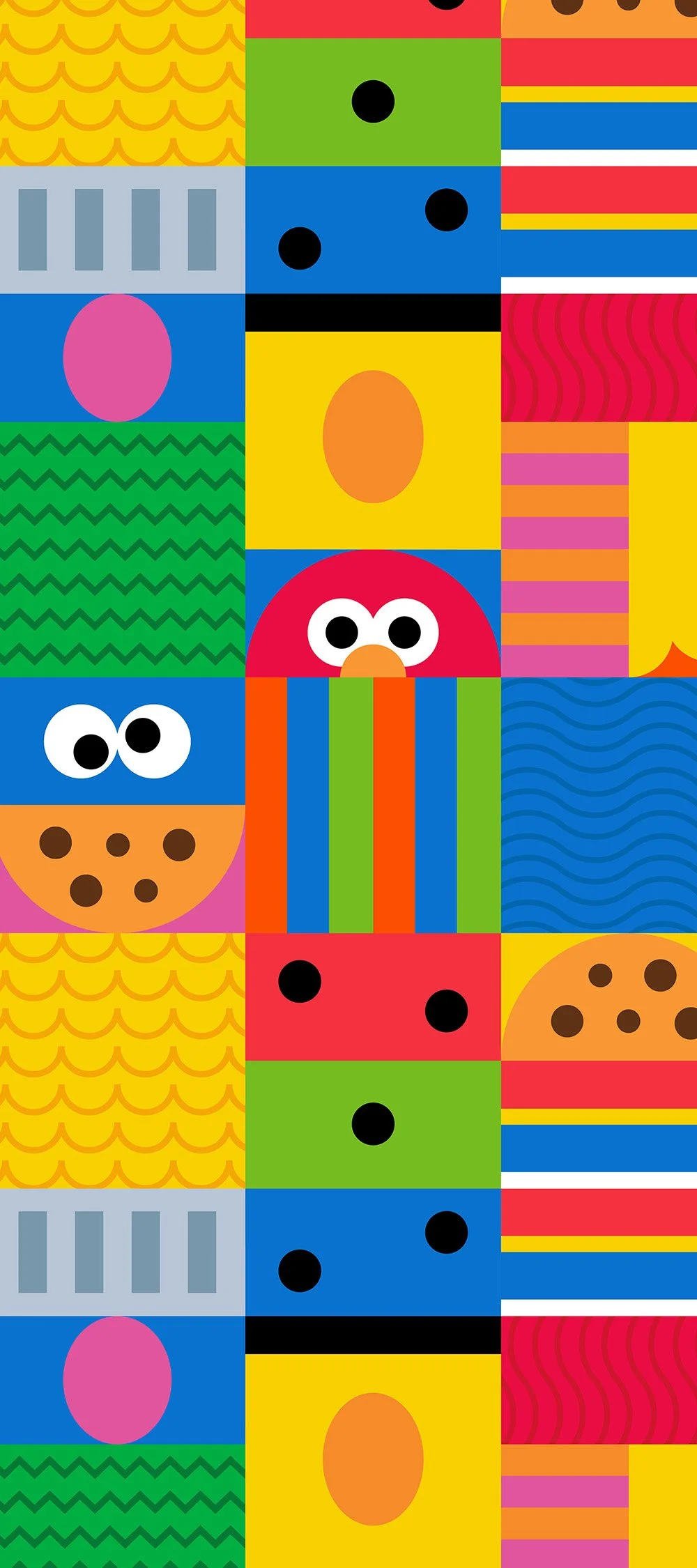
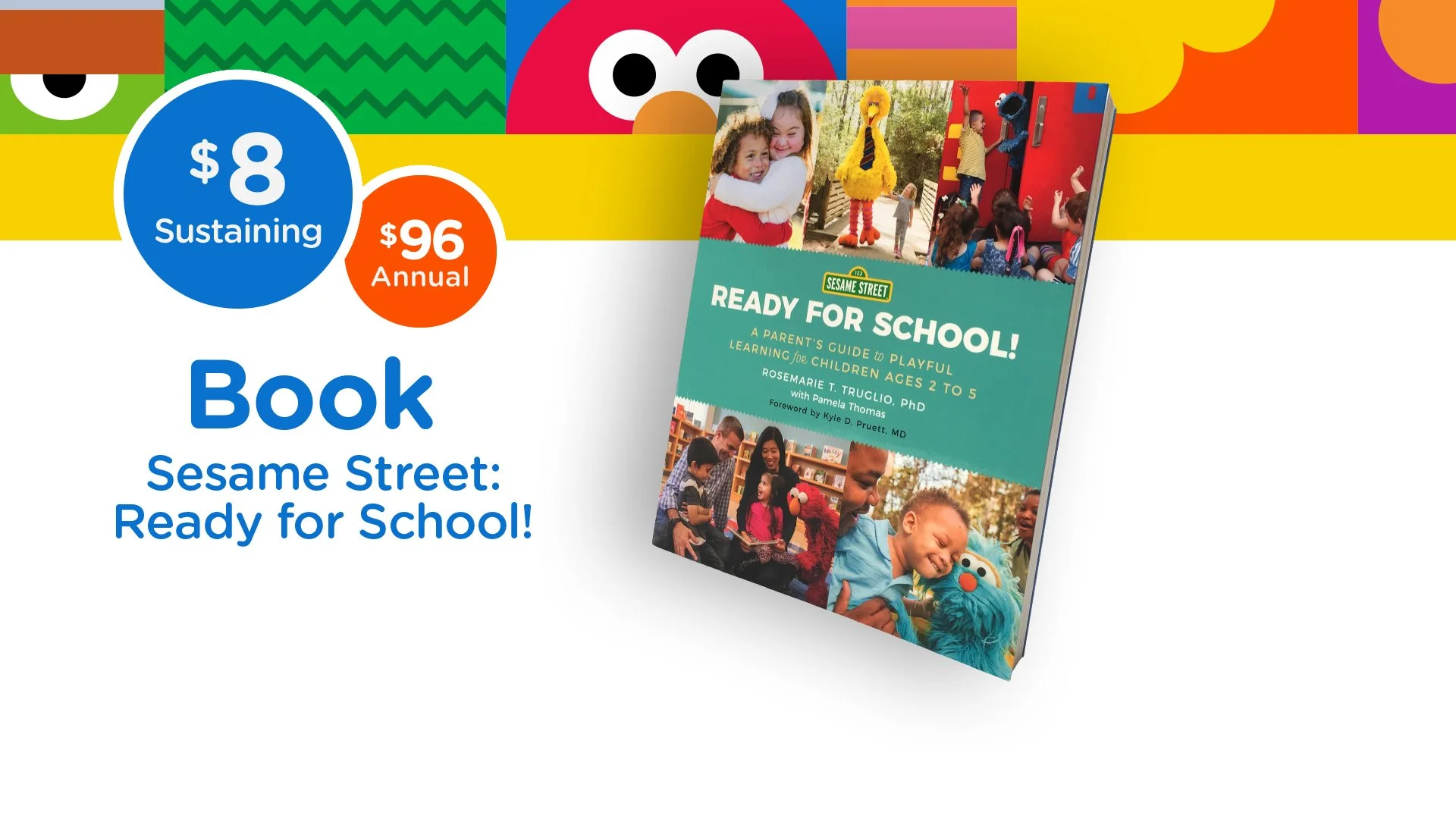
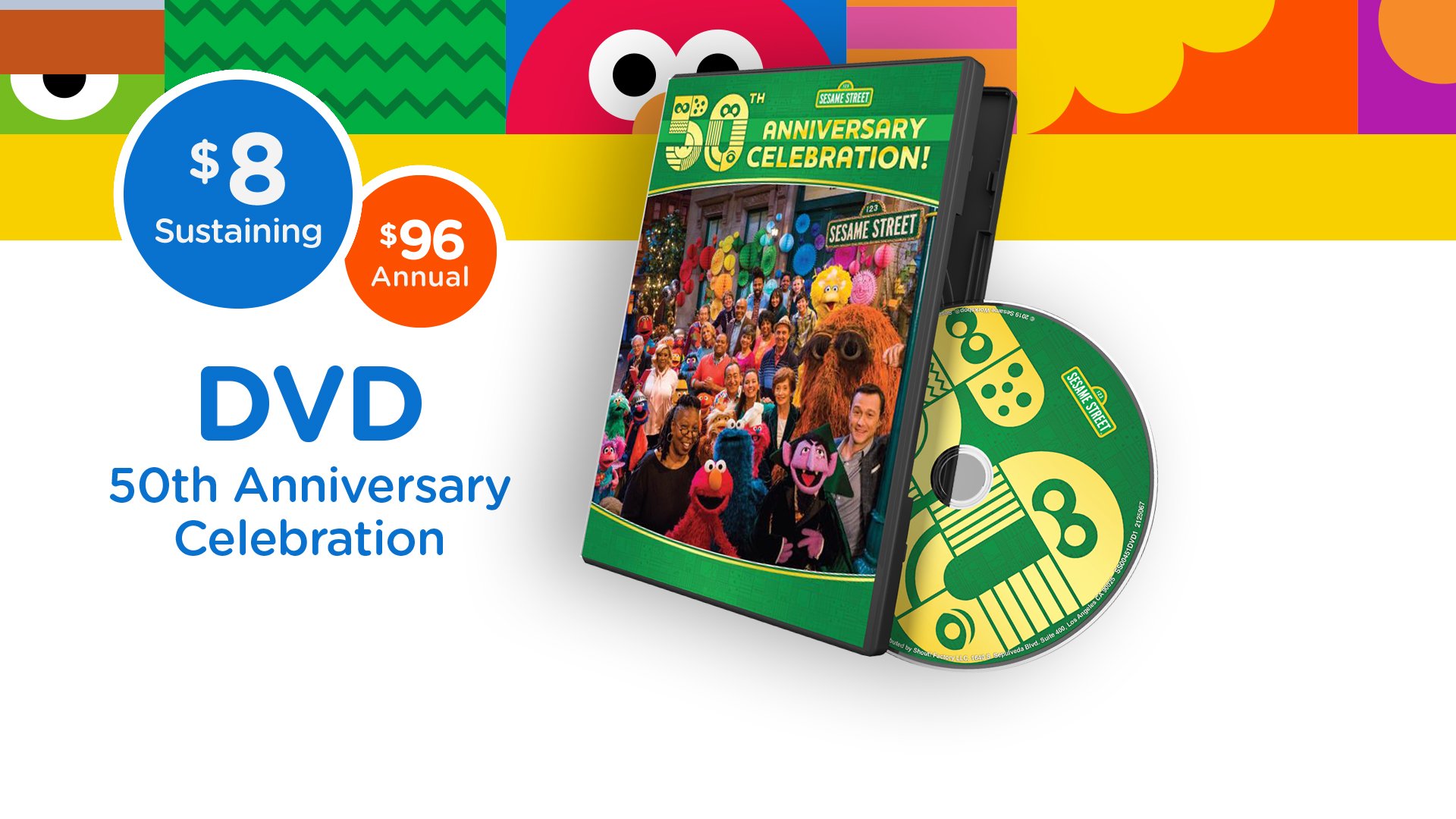

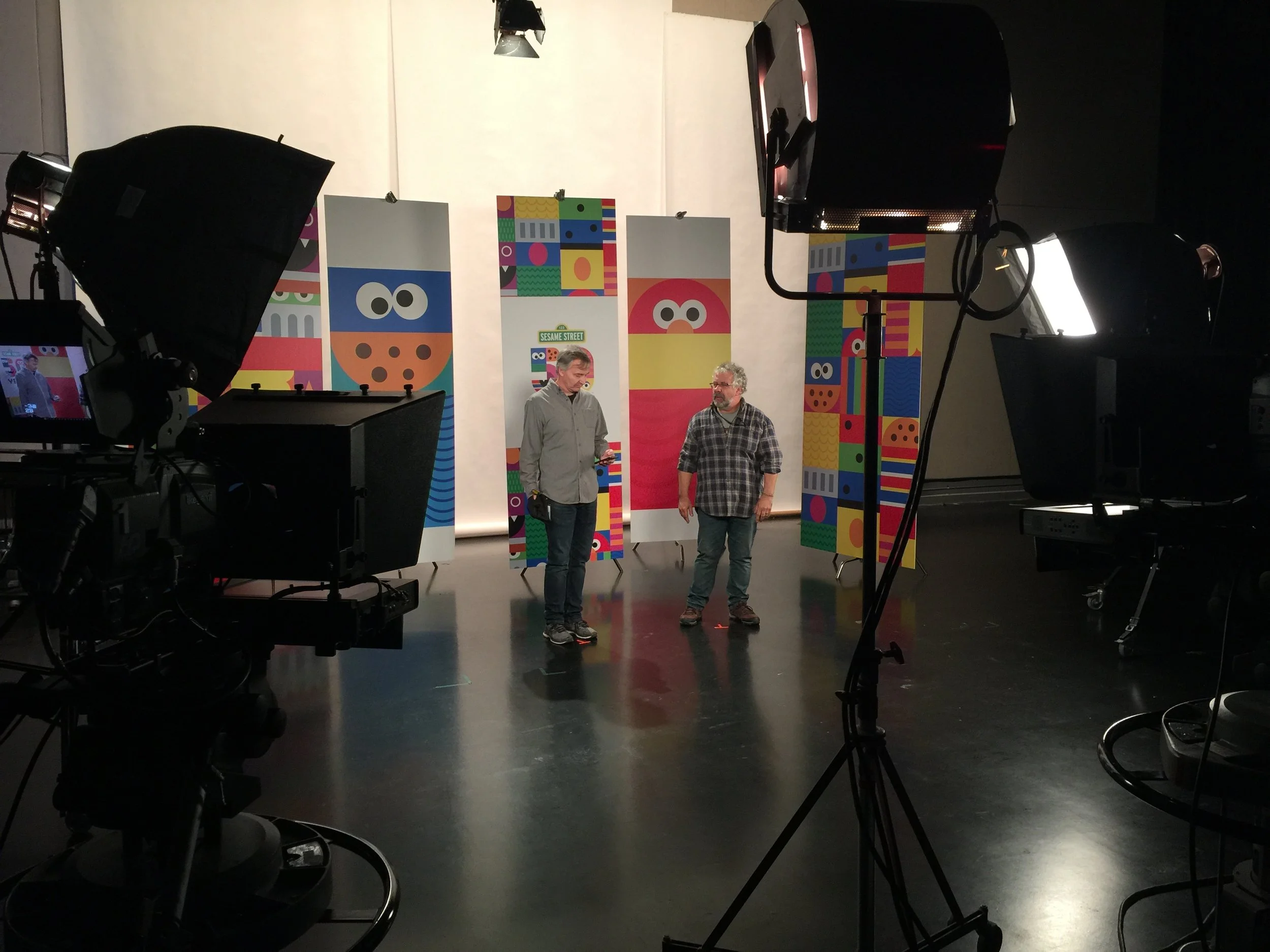
Studio Directors reviewing the set before the recording.
Traveling Mobile Display
Minnesota Military & Veterans Museum – 9/11 & Global War on Terror Memorial Exhibition
Overview
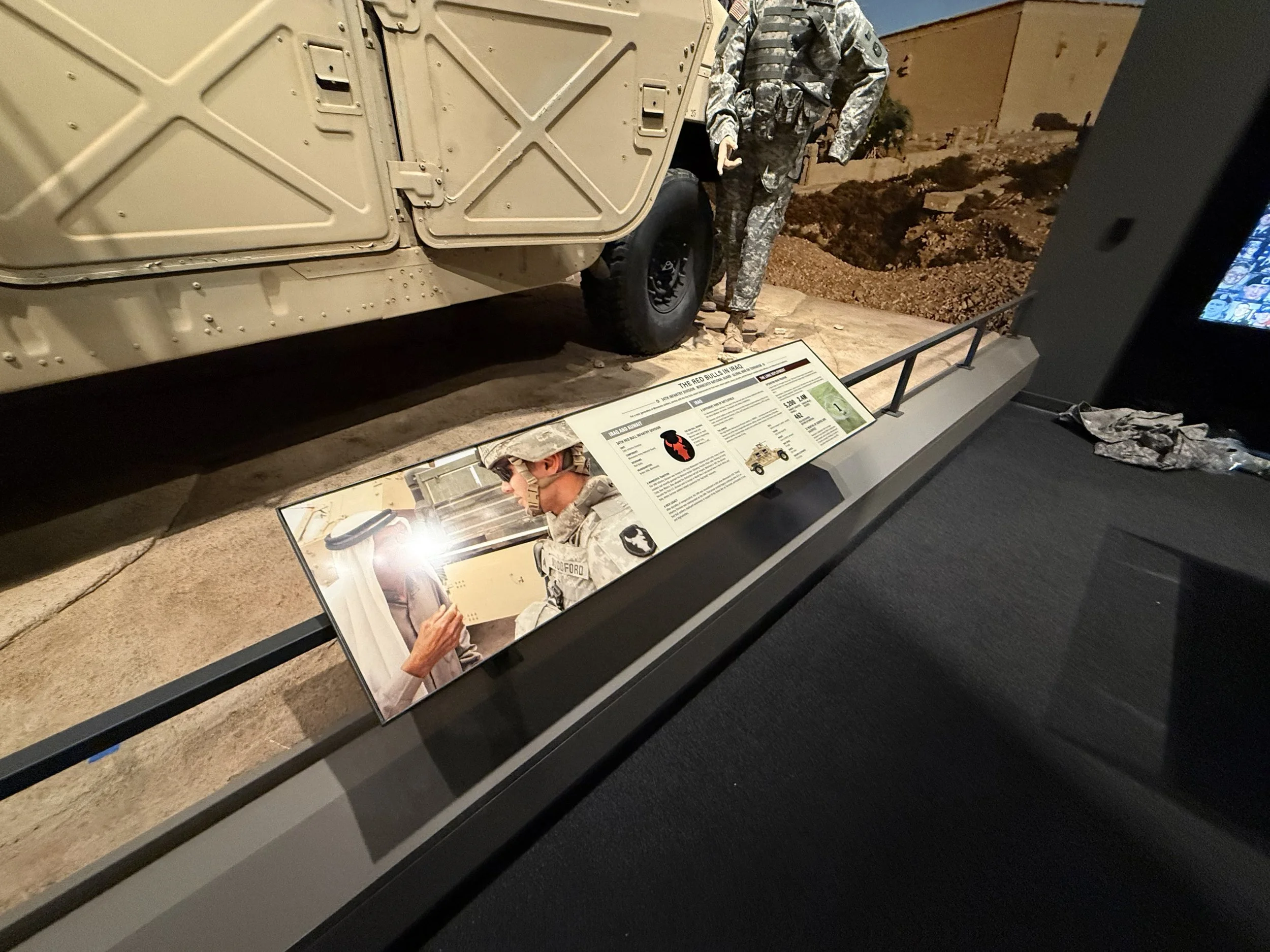
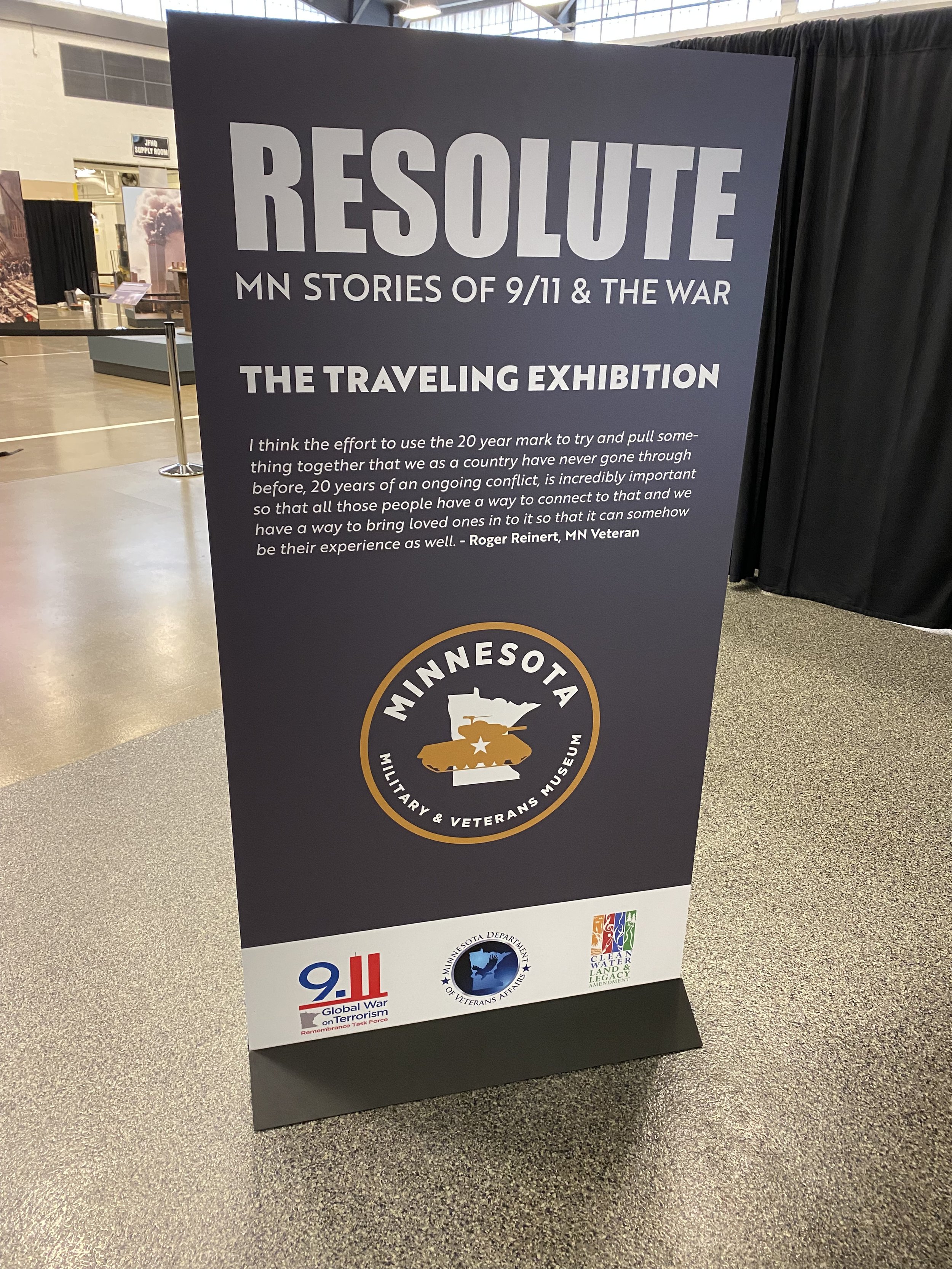
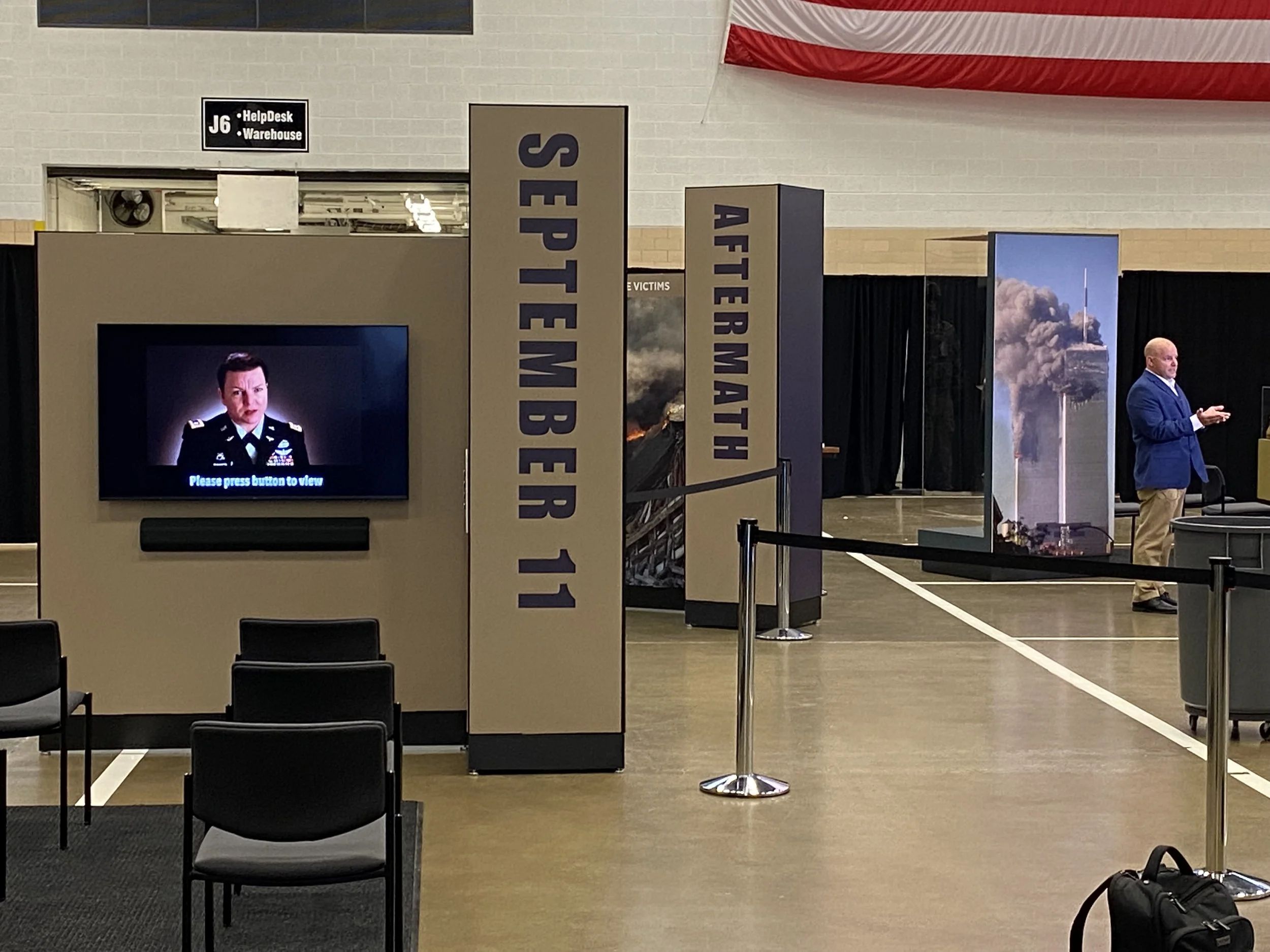
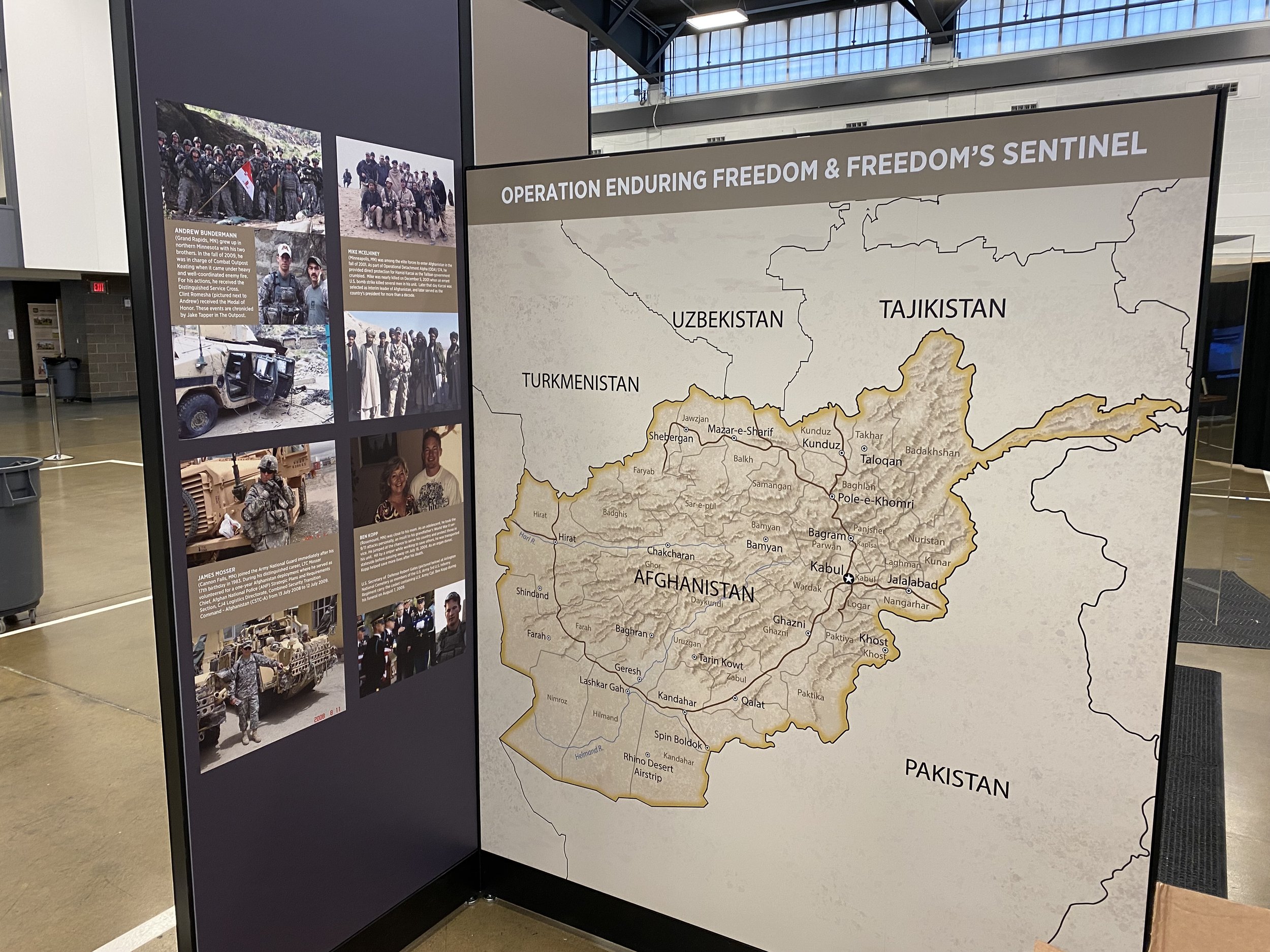
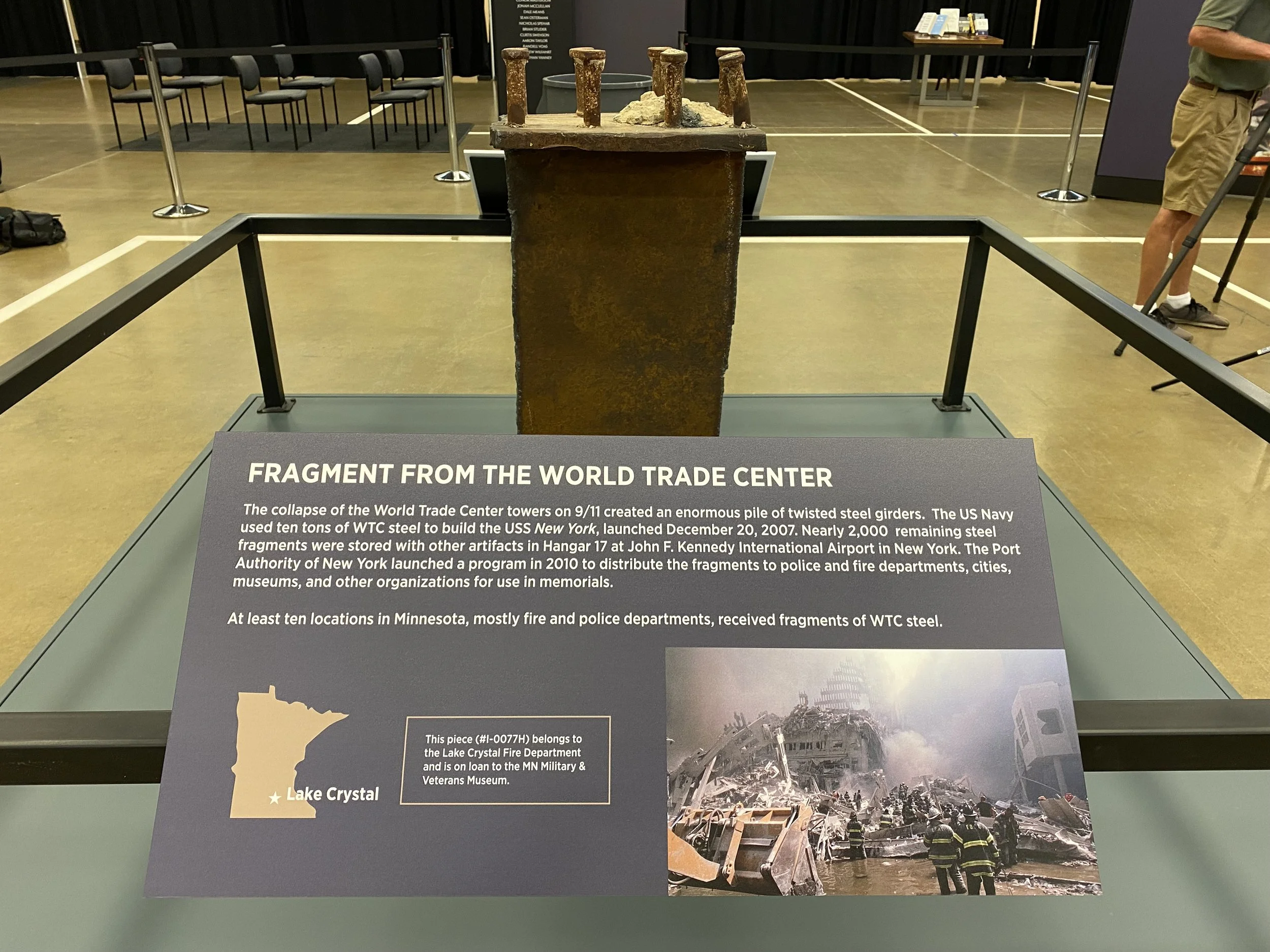
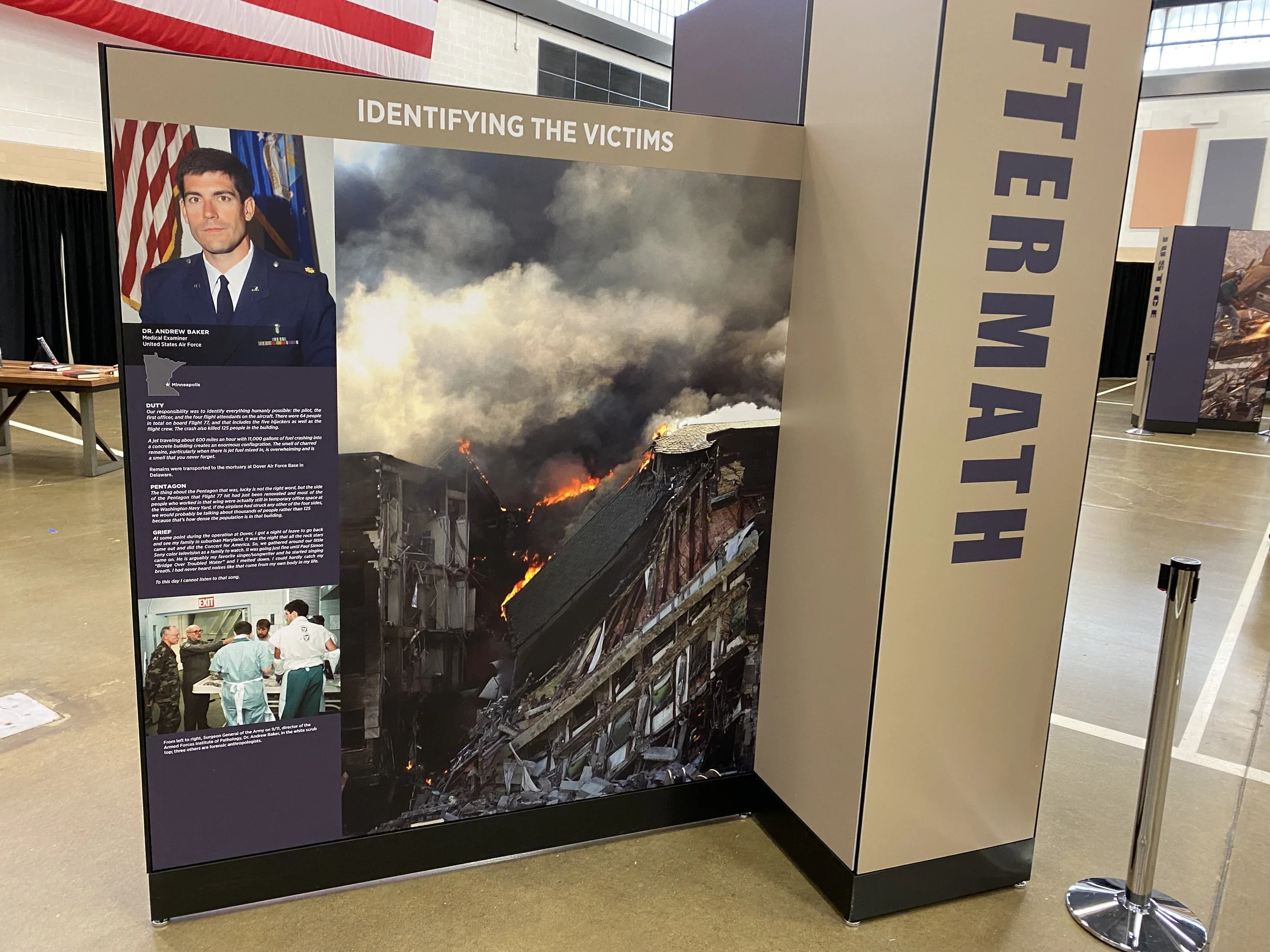
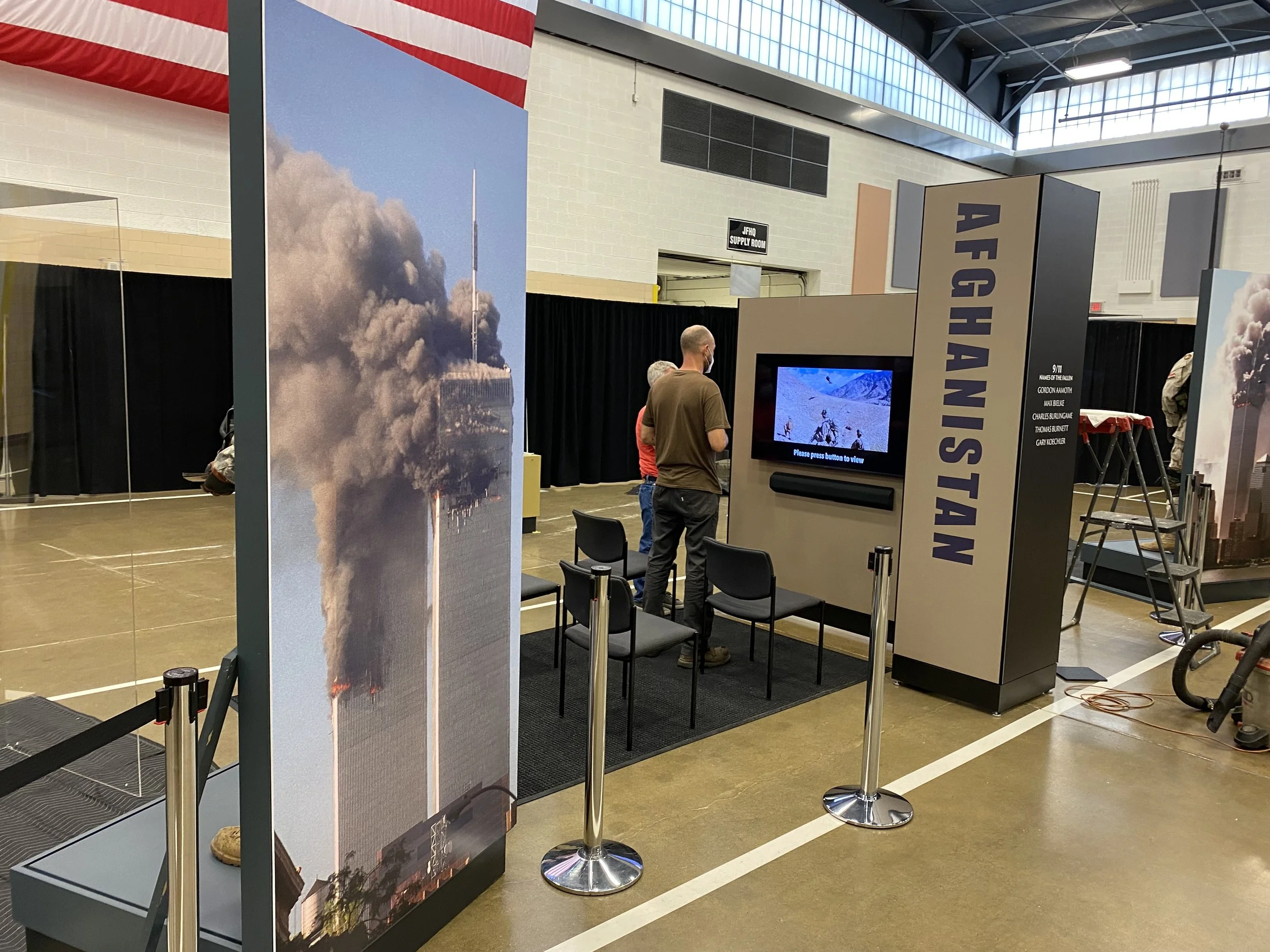
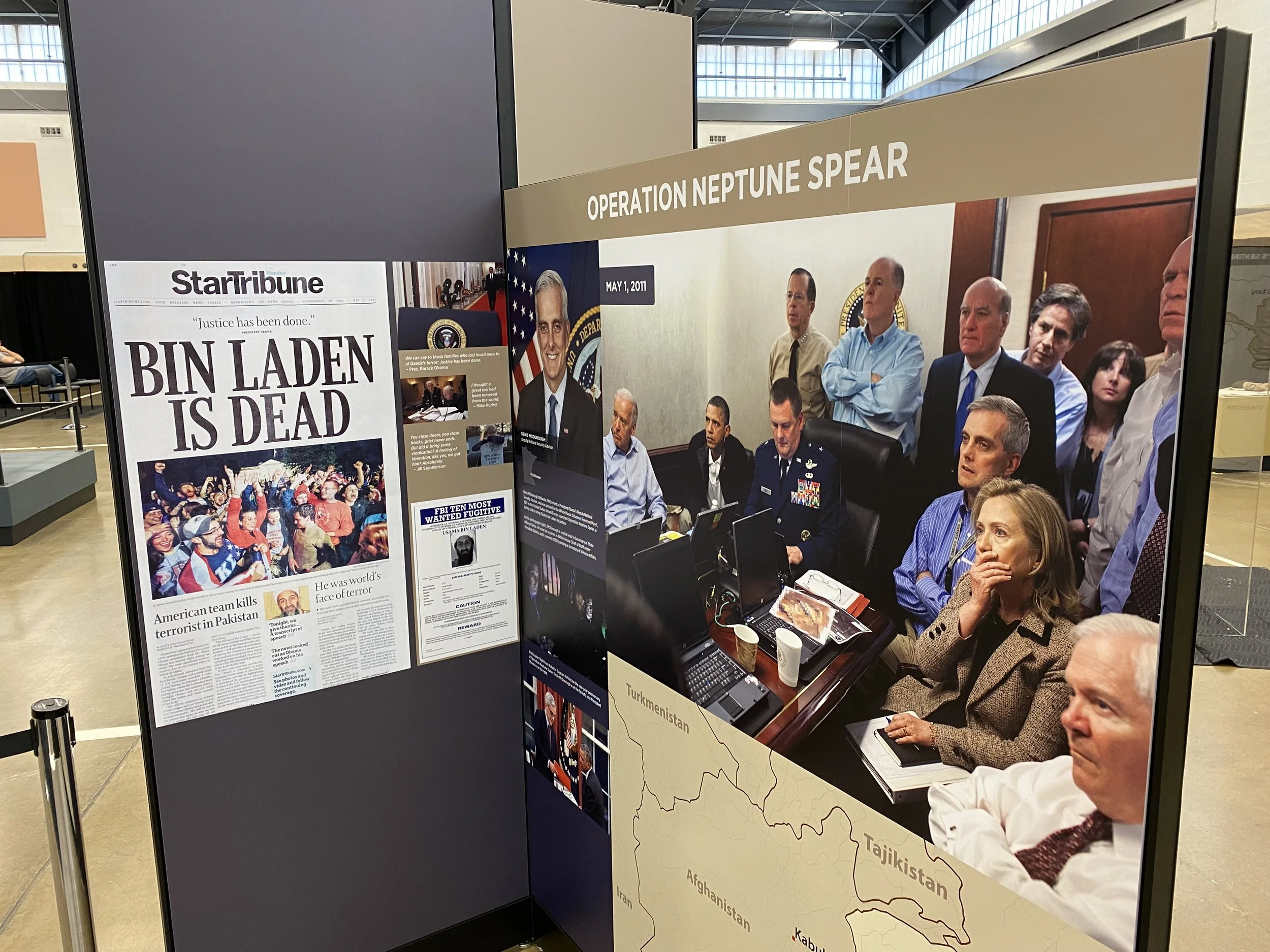
Design a powerful, interactive traveling exhibition to honor and educate the public about Minnesota’s role in the September 11 attacks and the Global War on Terror (GWOT). This mobile display was needed by the Minnesota Military & Veterans Museum as part of a statewide initiative and continues to tour across Minnesota communities.
Challenges & Opportunities
This was a high-visibility campaign for the State of Minnesota, requiring close coordination with the Museum Director, artisans - steel fabricators, and print vendors. One of the main challenges was engineering a display that was both durable and transportable—capable of maintaining visual integrity through years of travel and repeated installation.
We collaborated with local artisans to fabricate custom-welded steel frames, ensuring the artwork fit precisely. The panels—91 in total—were printed on resilient PVC substrate for longevity. The exhibit also included life-size mannequins and sculptural elements created by a commissioned artist to bring personal stories and emotional resonance to the display.
Approach
Finding the right fabrication and print partners was essential. I led the coordination across all vendors, ensuring every panel matched its corresponding frame and that the final experience would be impactful in any venue. The steel fabricators were experienced in museum-grade work, which helped streamline the structural execution, while our printer handled large-format output with precision.
Results
The exhibition has already been shown in five locations across Minnesota and continues to travel—bringing history to life and educating diverse communities about Minnesota’s deep and ongoing contributions to national service post-9/11. It has been praised for its emotional power, craftsmanship, and educational value—and stands as a moving tribute to those who served and sacrificed.
Symbols convey much about who we are and what we value. For years, Jon Van Amber has been a thoughtful and innovative designer for the Minnesota Military & Veterans Museum at Camp Ripley. Together, we have worked hard to honor the state’s 304,000 veterans and all who have served since statehood.
On September 11, 2021, Jon’s superb design work supported the state’s 20th Anniversary Remembrance (from the steps of our State Capitol) of the 9/11 attacks. Specifically, in the interstitial videos used between the dignitaries speaking that morning and the Post-9/11 traveling exhibition on display in the Cedar Street Armory.
In my estimation, what makes Jon exceptional is his capacity to listen. He seeks to understand long before he puts pen to paper. Jon is a joy to work with and a state servant.
Randal Dietrich, Executive Director, Minnesota Military & Veterans Museum at Camp Ripley
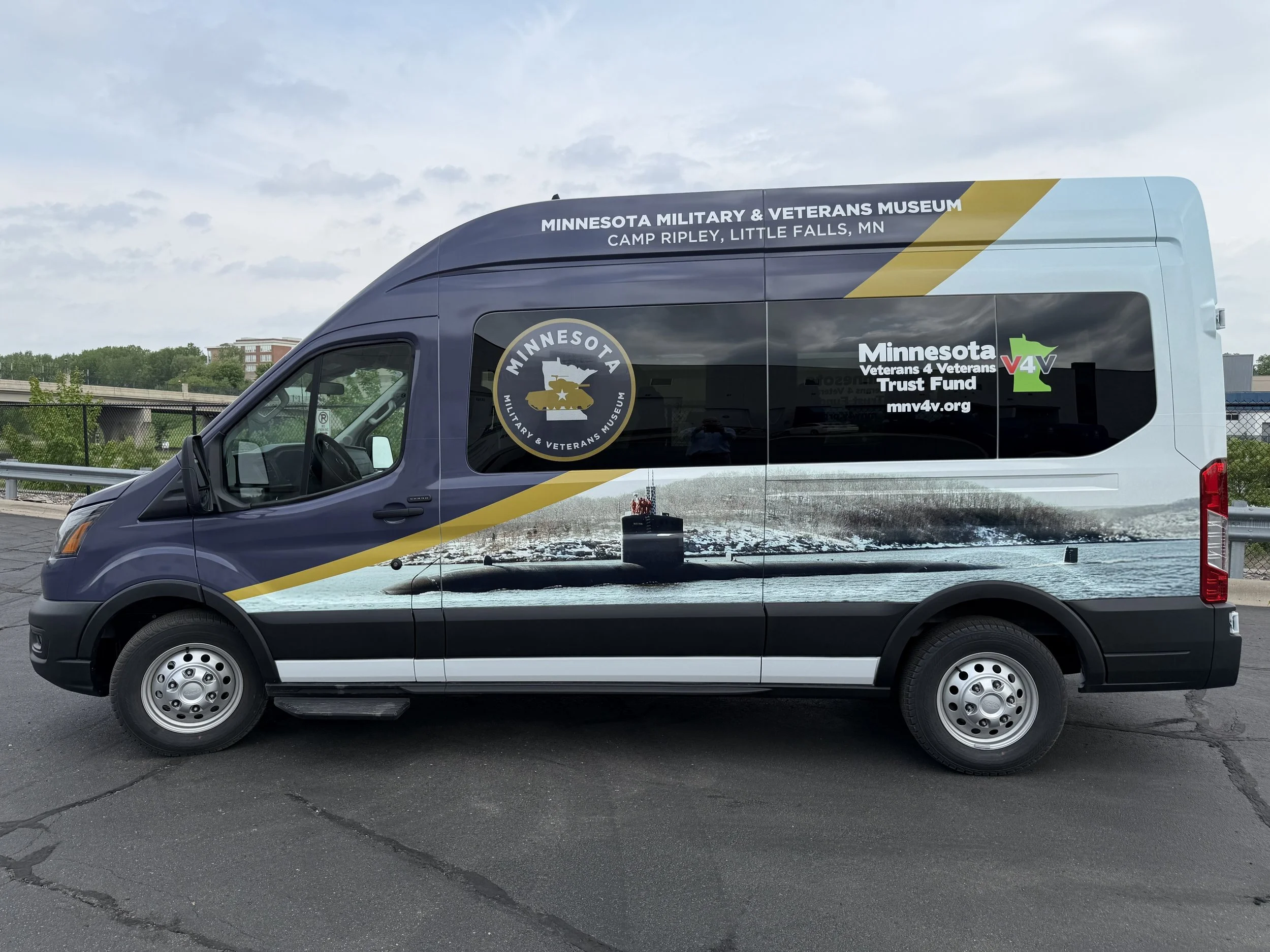
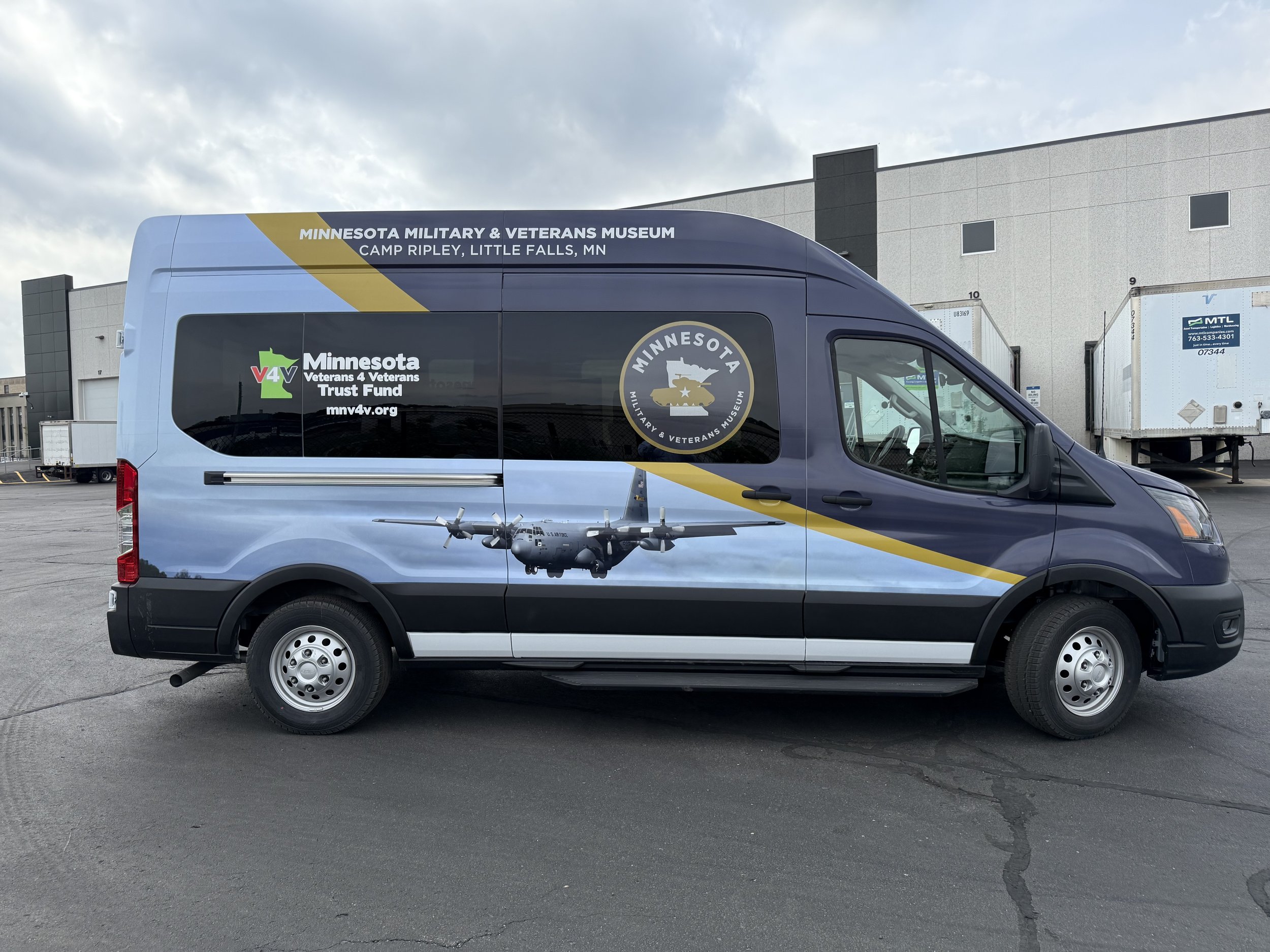
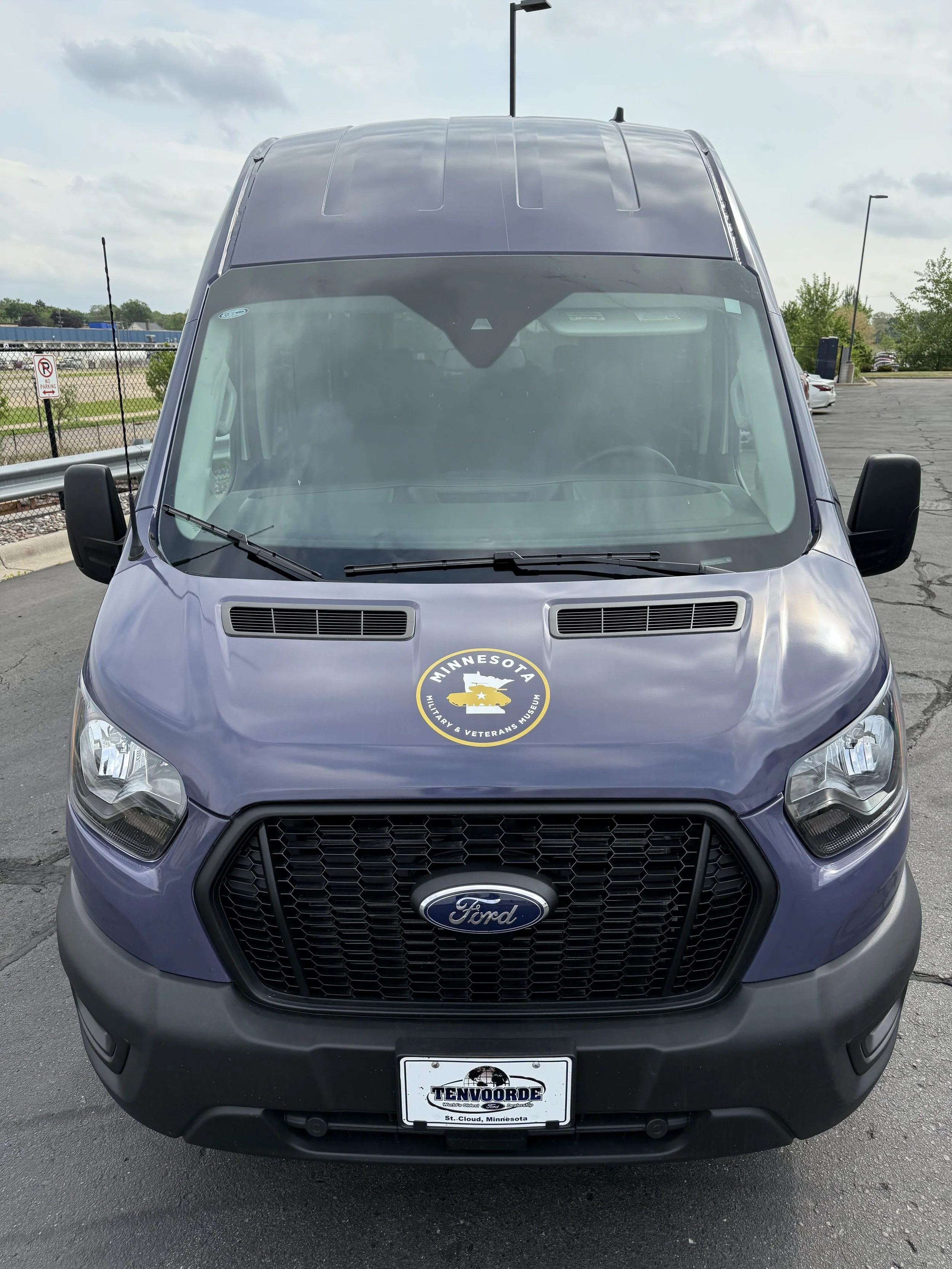
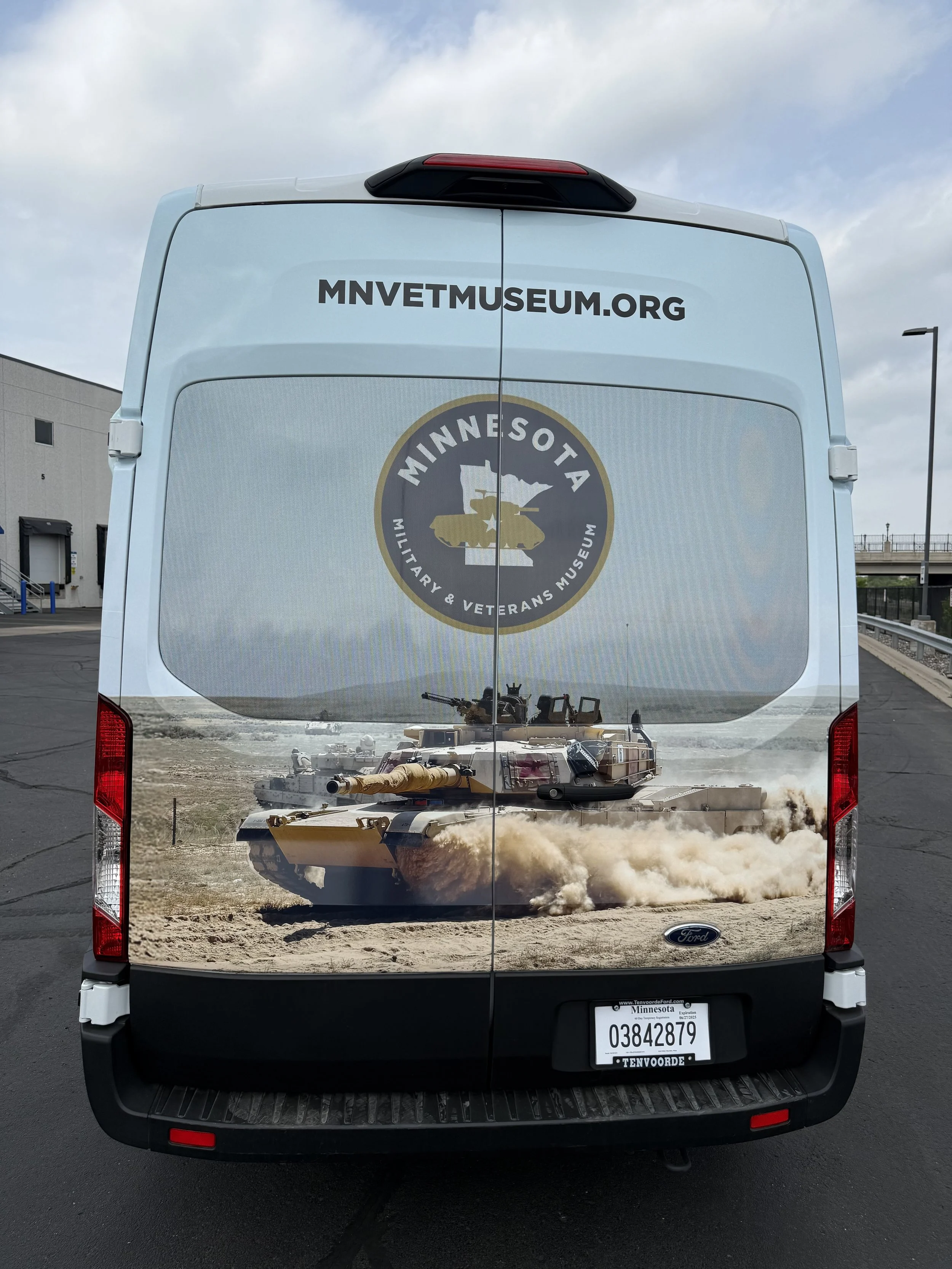
Vehicle wrap design
Minnesota Military & Veterans Museum
Overview
The museum purchased a new Ford passanger van and needed an eye-catching design that reinforces the brand and to serve as a moving billboard.
Challenges & Opportunities
This was a tight turn around but it was an opportunity to work with a trusted vendor. Vomela has been a reliable partner for me for many projects like this, and they always come through. It was a minor challenge but finding the exact schematic for this version of the passanger van took a little time.
Approach
Representing all branches of the military - generally was the goal along with Minnesota History. Once the design was finalized and approved by the Executive Director and other stakeholders, the files were converted to how the printer needed them including original images and working files.
Results
From design approval to delivery was one week. The results turned out to be exceptional. Client was thrilled. I’m very appreciative of my trusted partner at Vomela in Saint Paul!